
Are you creating great content but still struggling to attract the high-authority backlinks that drive rankings? The problem often isn’t the quality of your writing but its relevance to the websites you want links from. To succeed in 2026, you must create content that not only serves your audience but also provides tangible value to other site owners.
To ensure your content is relevant for link building, you must align your content strategy with your link acquisition goals from the start. This involves identifying topics that resonate with both your target audience and the publishers in your niche, analyzing competitor backlink profiles to find proven opportunities, and creating high-value assets like original research or free tools that other websites are naturally motivated to cite and link to.
Why Content Relevance Is the Foundation of Link Building in 2026
In today’s SEO landscape, relevance is not just a best practice, it’s a requirement. Search engines like Google have become incredibly sophisticated at understanding context and user intent. A link from an irrelevant website, even a high-authority one, carries little weight and can even be seen as a manipulative signal. The most powerful links come from content that is topically aligned with your own.
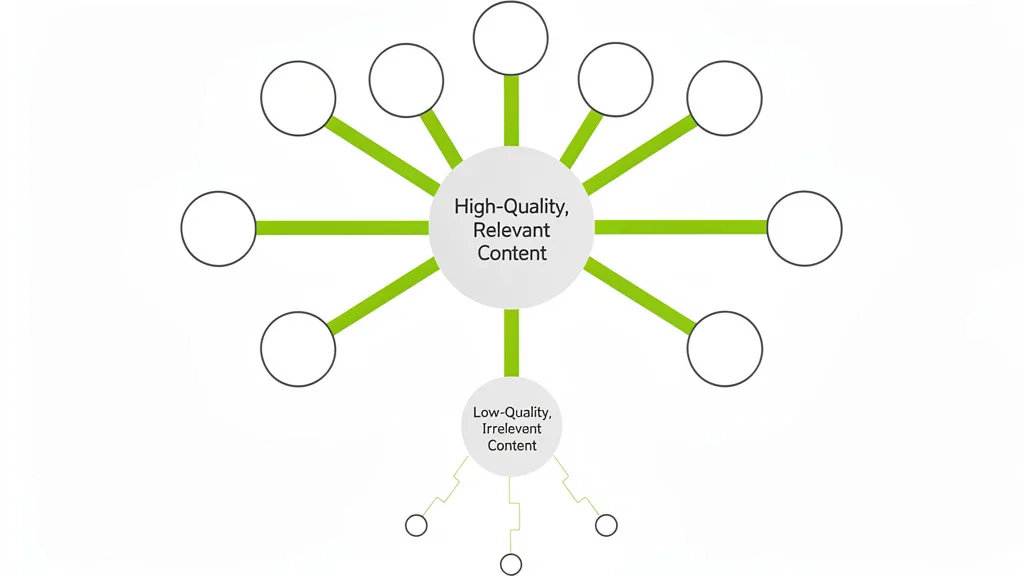
When your content is highly relevant to the linking page, it creates a strong contextual signal that tells search engines what your page is about. This reinforces your topical authority and helps you rank for your target keywords. Furthermore, relevant content provides genuine value to the reader, making the link a natural and helpful citation rather than a forced placement. This is the core principle behind sustainable, long-term seo link building strategies that withstand algorithm updates.
Understanding the Core Principles of Link Building
Before diving into content creation, it’s essential to grasp the fundamental principles that govern link building. A successful strategy is built on more than just creating good content; it requires understanding the mechanics of how search engines perceive and value links. This knowledge allows you to make strategic decisions that yield the best results.

From the difference between earning and building links to the critical role of authority, these core concepts form the bedrock of any effective campaign. Mastering them will help you focus your efforts on activities that move the needle and avoid tactics that waste time or, worse, incur penalties.
Link Building vs. Link Earning: What’s the Difference
The terms “link building” and “link earning” are often used interchangeably, but they represent two different approaches. Link earning is a passive process where you create exceptional content that naturally attracts links over time because it’s a valuable resource. This is the ideal scenario, but it can be slow and unpredictable, especially for new websites.
Link building, on the other hand, is a proactive process that involves manual outreach and strategic placement to acquire links. This includes tactics like guest posting, broken link building, and utilizing a powerful PBN backlinks service to secure placements on high-authority, relevant domains. A balanced strategy often combines both approaches, using great content as the foundation for proactive outreach. You can learn more about SEO Like a Pro With these advanced techniques.
The Role of Authority and Trust in SEO
Not all links are created equal. Search engines use signals of authority and trust to determine the value of a backlink. Authority is often measured by metrics like Domain Authority (DA) or Domain Rating (DR), which estimate a website’s overall link equity. A link from a high-DA site like a major news publication passes more authority than a link from a small, unknown blog.
Trust is a more abstract concept related to the quality and history of a website’s link profile. Sites with links from trusted institutions (.edu, .gov) and established industry authorities are considered more trustworthy. When building your link profile, it’s crucial to focus on acquiring links from sites that possess both high authority and strong trust signals, as this is what drives significant ranking improvements.
Identifying High-Quality vs. Low-Quality Backlinks
Distinguishing between high-quality and low-quality links is one of the most critical skills in SEO. High-quality links are relevant, come from authoritative domains, are placed contextually within the content, and use natural anchor text. They are the driving force behind top rankings in competitive niches.
Conversely, low-quality links often come from irrelevant sites, spammy directories, or networks with a clear footprint. These links provide little to no value and can even lead to a manual penalty from Google. Investing in a reputable PBN backlinks service ensures every link is vetted for quality, relevance, and safety, protecting your site from risk while delivering maximum impact.
The following table breaks down the key differences to help you assess link opportunities.
| Attribute | High-Quality Link | Low-Quality Link |
|---|---|---|
| Relevance | From a topically aligned website and page | From an unrelated or irrelevant website |
| Authority | High Domain Authority (DA) and page authority | Low or non-existent authority metrics |
| Placement | Contextually within the main body content | In a footer, sidebar, or on a page with hundreds of other links |
| Website Quality | Professional design, original content, real traffic | Poor design, spun or thin content, no organic traffic |
| Link Profile | The linking site has a natural, diverse backlink profile | The linking site has a spammy or manipulated link profile |
Step 1: Align Your Content Strategy With Link Building Goals
Effective link building doesn’t happen by accident. It begins with a content strategy that is intentionally designed to attract links. Instead of creating content and then trying to build links to it, the most successful campaigns identify link opportunities first and then create content specifically to earn those placements.

This strategic alignment ensures that every piece of content you produce has a clear purpose and a built-in promotion plan. There are several Things You Should Know Before you begin, as this foundational step separates campaigns that succeed from those that fail to gain traction.
Defining Your Target Audience for Outreach
When creating content for link building, you have two audiences: your end-user and the website owner you want a link from. Your content must serve both. Start by creating personas for the editors, journalists, and bloggers in your niche. What kind of content do they share? What topics are they interested in? What formats do they prefer to link to?
Understanding their needs and motivations will help you tailor your content to be the perfect resource for their audience. If you can create a piece of content that makes their job easier or makes them look good to their readers, you dramatically increase your chances of getting a link.
Analyzing Competitor Backlink Profiles for Opportunities
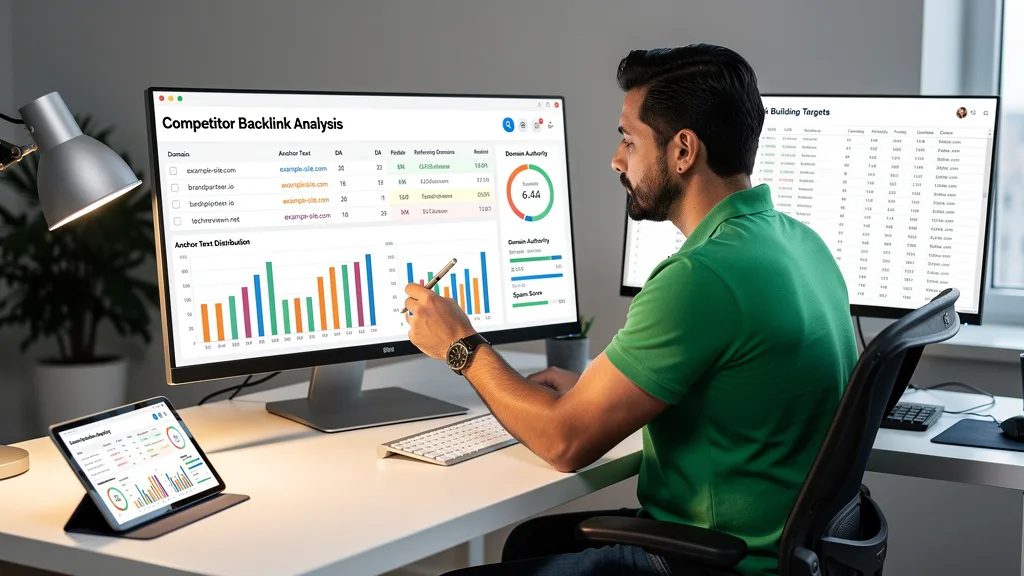
Your competitors have already done a lot of the hard work for you. By analyzing their backlink profiles using tools like Ahrefs, Moz, or Semrush, you can identify the exact pages that are earning them the most links. This is a goldmine of proven content ideas and potential link targets.
Look for patterns in their most-linked-to content. Are they creating original research, ultimate guides, or free tools? Identify the websites that link to them multiple times, as these are likely prime targets for your own outreach. This process, often called the “skyscraper technique,” involves finding what works and creating something even better. It is a cornerstone of any effective link building for a new website strategy.
Setting Realistic Link Acquisition Targets
Link building is a marathon, not a sprint. It’s important to set realistic, measurable goals for your campaigns. Instead of aiming for a vague target like “get more links,” set specific objectives, such as “acquire 10 links from websites with a DA of 50+ in the finance niche within the next quarter.”
Your targets should be based on your resources, your industry’s competitiveness, and your analysis of competitors. A new website can’t expect to match the link velocity of an established brand overnight. Start with achievable goals, measure your progress, and adjust your strategy over time. This data-driven approach will keep your campaign on track and demonstrate its value to stakeholders.
Step 2: Research and Validate Link-Worthy Content Ideas
Once your strategy is aligned, the next step is to find specific content ideas that have a high probability of attracting links. This phase is all about research and validation, using data to inform your creative process. Brainstorming is important, but ideas backed by data are far more likely to succeed.

By combining keyword research, competitive analysis, and an understanding of what makes content inherently linkable, you can build a pipeline of topics that are primed for success. This systematic approach removes guesswork and focuses your resources on creating assets with the highest potential return on investment.
Using Keyword Research to Find Relevant Topics
Keyword research isn’t just for on-page SEO; it’s a powerful tool for link building. Look for informational keywords (those starting with “how to,” “what is,” “why”) that indicate a user is looking for a comprehensive answer. These topics are perfect for creating definitive resources that other sites will want to reference. Are PBN Links Safe.
Pay attention to keywords that have a high number of referring domains in the top-ranking results. This is a clear signal that the topic is one that people link to. Tools like Ahrefs’ Content Explorer can help you find topics that have both high search volume and a proven history of attracting links, giving you the best of both worlds.
Performing a Content Gap Analysis
A content gap analysis involves identifying important topics in your niche that your competitors are covering but you are not. By finding these gaps, you can create content that fills a void in the market and captures a new audience. This is a strategic way to build topical authority and create linkable assets simultaneously.
Use an SEO tool to compare your domain’s keyword rankings against those of two or three top competitors. The tool will generate a list of keywords they rank for that you don’t. Filter this list to find relevant, high-value topics that align with your link building goals and create content that is superior to what is currently available.
Brainstorming Ideas That Naturally Attract Links
Some content formats are inherently more “linkable” than others. These pieces, often called “linkbait” or “linkable assets,” provide so much value that other site owners are compelled to share them. While creating these often requires more effort, the payoff in terms of high quality links can be enormous.
Focus on creating resources that are difficult to replicate and serve a genuine need in your industry. Here are some proven ideas for content that naturally attracts links:
- Original Research & Data Studies: Conduct surveys or analyze data to uncover new insights that journalists and bloggers can cite.
- In-depth Guides & Tutorials: Create the most comprehensive resource on a specific topic, becoming the go-to page for that subject.
- Free Tools & Calculators: Develop a simple tool that solves a common problem for your audience, like a mortgage calculator or a headline analyzer.
- Expert Roundups: Compile insights and quotes from multiple industry experts on a single topic.
- Infographics & Visual Assets: Present complex information in an easy-to-digest visual format that is highly shareable.
- Case Studies: Showcase real-world results you’ve achieved for a client, providing social proof and actionable insights.
Step 3: Create High-Value Content Formats That Earn Links
With a validated list of ideas, it’s time to create the content itself. The key is to go beyond standard blog posts and invest in high-value formats that stand out from the competition. These assets require a greater investment of time and resources but offer a significantly higher return in terms of link acquisition and brand authority.
The goal is to create the definitive resource for your chosen topic. When someone searches for that term, your content should be the best, most comprehensive, and most helpful result. This level of quality is what motivates other creators to link to you as an authoritative source.
Original Research, Case Studies, and Data
Content that presents new data or original research is one of the most powerful link magnets available. Journalists, bloggers, and researchers are always looking for statistics and data to support their arguments. By becoming the primary source for a new piece of information, you can earn dozens or even hundreds of high-quality links.
Similarly, detailed case studies provide immense value by showing a real-world application of a strategy or product. They offer proof and actionable takeaways that are highly citable. When considering a Niche Edit vs Guest Post vs PBN Link, the underlying content must be strong enough to justify the link, and data-driven pieces provide that justification.
Comprehensive Guides and In-Depth Resources
Another highly effective format is the comprehensive guide or “ultimate resource.” This involves creating a piece of content that covers a topic in more depth and detail than anyone else. Think of it as a one-stop shop for everything a person needs to know about that subject.
These guides often become evergreen assets that attract links and traffic for years. They establish your website as a topical authority and serve as a central hub that you can link out to from other, smaller pieces of content. For those interested in advanced strategies, our guide on how to build a PBN is a perfect example of an in-depth resource.
Free Tools, Templates, and Interactive Content
In a world saturated with content, utility is a powerful differentiator. Creating a free tool, a downloadable template, or an interactive piece of content provides tangible value that goes beyond information. People will link to your tool because it helps their audience solve a problem. Buy PBN Links.
“The best link building happens when you’re not even trying. Create something so useful that people can’t help but talk about it and link to it. That’s how to ensure your content is relevant for link building in the long run.”
Examples include calculators, generators, checklists, or simple web-based applications. While the development cost can be higher, a successful tool can become a passive link-generating machine for your business, attracting high-quality links with minimal ongoing promotion.
Step 4: Optimize and Promote Your Content for Maximum Reach
Creating amazing content is only half the battle. Without strategic promotion, even the best resource can go unnoticed. The final step is to optimize your content for search engines and actively promote it to the right people to ensure it gets the visibility and the links it deserves.
This phase combines technical SEO with human-centric outreach. It’s about making your content easy for Google to find and crawl, while also building genuine relationships with the people who can amplify its reach. A well-executed promotion strategy is what turns a great piece of content into a successful link building asset.
Implementing On-Page SEO Best Practices
Before you begin outreach, ensure your content is perfectly optimized for your target keyword. This includes crafting a compelling title tag and meta description, using your keyword in the URL and H1 tag, and including it naturally throughout the body copy. Proper on-page SEO helps your content rank on its own, which can lead to passive link acquisition over time.
Don’t forget technical elements like optimizing image alt text, ensuring fast page load speed, and implementing internal links to and from the new content. These details signal to search engines that your page is a high-quality, user-friendly resource worthy of a top ranking.
Building Relationships Before Asking for a Link
The most successful outreach starts long before you send the first email asking for a link. Focus on building genuine relationships with key influencers, bloggers, and editors in your niche. Follow them on social media, share their content, and leave thoughtful comments on their blog posts.
When you provide value to them first, they will be much more receptive when you finally have something to share. This approach transforms a cold outreach request into a warm introduction from a familiar face. It’s a long-term strategy, but it yields links from high-authority sites that would be impossible to get otherwise.
Conducting Strategic Blogger Outreach
When your content is published and optimized, it’s time for targeted outreach. Start by building a list of websites that have linked to similar content in the past. These are your most qualified prospects. Personalize each email, explaining why your content is a good fit for their audience and how it adds value to their existing pages.
Avoid generic templates and focus on being helpful. Suggest a specific page where your link could be added as a valuable resource for their readers. A strategic approach to content marketing blogger outreaching, combined with a powerful asset, is a winning formula. For those looking to scale their efforts, exploring high-quality PBN backlinks for sale can provide a significant boost to your campaign.
Key Takeaways
Creating content that is relevant for link building in 2026 requires a strategic, multi-faceted approach. By focusing on alignment, research, high-value formats, and smart promotion, you can build a sustainable engine for acquiring authoritative backlinks. Here are the most important points to remember:
- Relevance is Paramount: Links from topically aligned websites carry the most weight. Your content must be relevant to both your site and the linking site.
- Strategy First: Align your content creation with your link building goals from the outset. Create content with a promotion plan already in mind.
- Analyze Competitors: Use competitor backlink profiles to find proven content ideas and identify high-value link targets.
- Create High-Value Assets: Invest in formats like original research, comprehensive guides, and free tools that naturally attract links.
- Promote Strategically: Great content needs great promotion. Combine on-page SEO best practices with personalized, relationship-focused outreach.
- Quality Over Quantity: One high-quality, relevant link is worth more than a hundred low-quality, irrelevant ones. Focus your efforts on acquiring the best links possible.
Frequently Asked Questions
How does link building work?
Link building is the process of acquiring hyperlinks from other websites to your own. These links, also known as backlinks, act as “votes of confidence” from one site to another. Search engines like Google use the quantity and quality of these links as a key signal to determine a page’s authority and relevance, which directly impacts its ability to rank in search results.
A successful link building campaign involves creating valuable content and then strategically promoting it to other website owners, editors, and bloggers. The goal is to earn placements on relevant, authoritative sites, which passes “link equity” to your page and boosts its visibility in search.
Do backlinks still matter in 2026?
Yes, backlinks are still one of the most important ranking factors in SEO in 2026. While Google’s algorithm has become much more complex, incorporating hundreds of signals, high-quality backlinks remain a foundational element for demonstrating authority and trust. Google’s own representatives have consistently confirmed their importance.
What has changed is the emphasis on quality and relevance. Mass-produced, low-quality links are ineffective and risky. The focus now is on earning or building editorially given links from reputable, topically aligned websites. These are the links that drive meaningful ranking improvements.
What is the 80/20 rule in SEO?
The 80/20 rule, also known as the Pareto Principle, suggests that roughly 80% of your results will come from 20% of your efforts. In SEO, this often means that a small number of high-impact activities drive the majority of your traffic and ranking gains. For example, 20% of your pages might generate 80% of your organic traffic.
In the context of link building, this principle highlights the importance of focusing on high-quality opportunities. A few powerful links from top-tier, relevant domains (the 20%) will have a much greater impact than hundreds of low-quality links (the 80%). It encourages you to prioritize your efforts on the most impactful tasks.
What are the 5 components of SEO?
While SEO can be broken down in many ways, it is commonly segmented into five core components. The first is Technical SEO, which ensures your site can be crawled and indexed properly. The second is On-Page SEO, which involves optimizing individual page elements like content and HTML tags.
The third component is Off-Page SEO, which primarily consists of link building to build your site’s authority. The fourth is Content, which is the foundation for attracting both users and links. Finally, the fifth is User Experience (UX), which includes factors like site speed, mobile-friendliness, and user engagement signals that increasingly influence rankings.
Conclusion
To ensure your content is relevant for link building in 2026, you must shift your mindset from simply creating content to creating strategic assets. By aligning your content with your outreach goals, validating your ideas with data, and investing in high-value formats, you create resources that other websites want to link to. This proactive, relevance-first approach is the key to building a powerful backlink profile that drives sustainable organic growth.
Ready to accelerate your link building with backlinks that are guaranteed to be relevant and powerful? Our team hand-selects high DA aged domains to build a private blog network that delivers fast, safe, and significant ranking improvements for SEO professionals in the most competitive niches. Take the guesswork out of link building and invest in a proven system. Get Started today and see the difference quality makes.