
Are you about to invest in a new domain, hoping it will become a powerful asset for your business or PBN? Before you finalize that purchase, understanding its true value is critical. The domain’s authority is one of the most significant predictors of its ability to rank in search engines and pass valuable link equity. Without proper verification, you could be buying a digital asset with a hidden toxic history or an artificially inflated score, wasting both time and money.
To check a domain’s authority, you can use free tools like Moz’s Link Explorer or Ahrefs’ Website Authority Checker. Simply enter the domain name to see its score, which is a number from 1 to 100 that predicts its ranking potential. For a comprehensive analysis, compare scores from multiple tools like Moz (DA), Ahrefs (DR), and Semrush (AS), and always investigate the backlink profile for signs of manipulation before making a purchase.
Why You Must Check Domain Authority Before Buying a Domain
Checking a domain’s authority is not just a formality; it’s a fundamental step in your due diligence process. A domain’s authority score, calculated by SEO software companies, serves as a proxy for its ranking strength. A higher score generally indicates a greater ability to rank for competitive keywords. When you acquire a domain, you are also acquiring its history, including its backlink profile, which is the primary driver of its authority. This inherited strength can give you a significant head start in SEO.
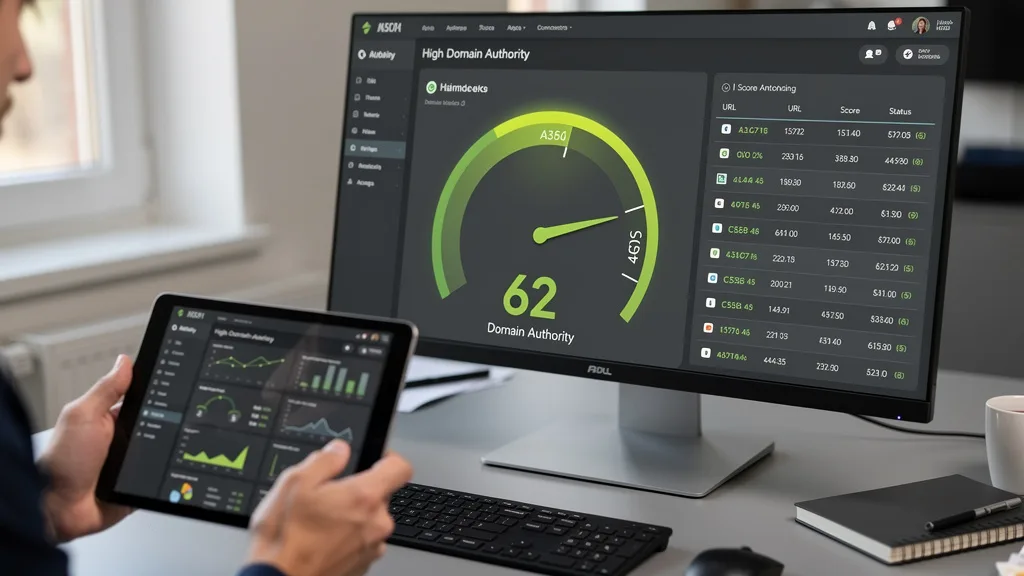
For SEO professionals building a Private Blog Network (PBN) or businesses looking for an aged domain, this step is even more critical. A high-authority domain can pass more powerful link equity, making the backlinks you build from it more effective. Ignoring this check is like buying a car without looking at the engine. You might end up with a domain that has a toxic backlink profile from spammy sources, which could harm your main website or simply fail to deliver any ranking benefits. Verifying the authority ensures you are investing in a clean, powerful asset, not a liability.
What Is a Good Domain Authority Score for a New Website?
For a brand new website registered for the first time, the Domain Authority (DA) score will almost always be 1. This is the baseline, representing a clean slate with no backlink history. It’s important to understand that DA is a logarithmic scale, meaning it’s much easier to grow from DA 10 to 20 than it is to grow from DA 60 to 70. Each step up the ladder requires exponentially more high-quality backlinks.

When you are looking to buy an existing or expired domain, you should be looking for a score significantly higher than 1. A score between 20 and 40 is considered average to good, while a score of 40 to 60 is very strong. Anything over 60 is considered excellent and is typically found on well-established sites with powerful backlink profiles. The ideal score depends on your goals and competition, but a higher, legitimate score means the domain has a proven history of acquiring valuable links, giving you a powerful foundation to build upon. This is why investing in real authority backlinks from vetted domains is so effective.
The Best Free Domain Authority Checker Tools in 2026
You don’t need an expensive subscription to get a preliminary look at a domain’s authority. Several reputable companies offer free tools that provide quick and reliable insights. These are perfect for initial screenings before you commit to a deeper, paid analysis. As of 2026, these tools remain the industry standard for a quick health check on any domain you’re considering.
Here are some of the best free domain authority checker tools available: buying an existing or expired domain.
- Moz Link Explorer: This is the original source of the Domain Authority (DA) metric. The free version allows a limited number of queries per month, giving you the DA score, the number of linking domains, and a glimpse at top pages and links.
- Ahrefs’ Website Authority Checker: Ahrefs provides its own metric, Domain Rating (DR). Their free tool shows you the DR score, the number of backlinks, and the number of referring domains, offering a great alternative perspective to Moz’s DA.
- Semrush’s Domain Overview: While much of Semrush is behind a paywall, its free Domain Overview tool provides an Authority Score (AS) along with data on organic traffic and top keywords. This gives a more holistic view beyond just backlinks.
- Majestic: Known for its massive link index, Majestic offers its own metrics called Trust Flow (TF) and Citation Flow (CF). The free version provides a summary report for any domain, which is excellent for assessing the quality and quantity of its backlinks.
Moz DA vs Ahrefs DR vs Semrush AS: A Detailed Comparison
When evaluating a domain, you will encounter several different authority metrics. The three most prominent in the SEO industry are Moz’s Domain Authority (DA), Ahrefs’ Domain Rating (DR), and Semrush’s Authority Score (AS). While they all aim to measure a domain’s strength on a 100-point scale, their methodologies differ significantly. Understanding these differences is key to making an informed decision.
Moz: Domain Authority (DA)
Domain Authority, or DA, is a search engine ranking score developed by Moz that predicts how likely a website is to rank on search engine result pages (SERPs). A Domain Authority score ranges from one to 100, with higher scores corresponding to a greater ability to rank. It is calculated by evaluating multiple factors, including linking root domains and the total number of links, into a single score. This metric is best used as a comparative tool to judge the strength of one website against another.
Ahrefs: Domain Rating (DR)
Ahrefs’ Domain Rating (DR) measures the strength of a target website’s total backlink profile. The scale is logarithmic and runs from 0 to 100. DR is calculated based on the number and quality of backlinks pointing to a website. Ahrefs’ formula considers how many unique domains link to the target, the DR score of those linking domains, and how many other sites each of those domains links to. It is a pure link-based metric and does not factor in traffic or keyword rankings.
Semrush: Authority Score (AS)
Semrush’s Authority Score (AS) is a compound metric used to measure a domain’s overall quality and SEO performance. It is based on a neural network that uses machine learning to weigh different factors. These factors include backlink data (quantity and quality of referring domains), organic search data (traffic volume and keyword positions), and website traffic data. This makes AS a more holistic metric compared to the purely link-based scores from Moz and Ahrefs.
Are These Scores Directly Comparable?
No, these scores are not directly comparable. A DA of 50 from Moz does not equal a DR of 50 from Ahrefs or an AS of 50 from Semrush. Each tool uses a proprietary algorithm and a different web index to crawl and evaluate links. For example, Ahrefs is known for having a larger and more frequently updated link index, which can lead to different scores. The best practice is to pick one primary metric for consistent comparison but to consult all three to get a well-rounded view of a domain’s authority. Discrepancies between the scores can also be a red flag, prompting a deeper investigation into the domain’s backlink profile.
| Metric | Provider | Primary Factors | Best For |
|---|---|---|---|
| Domain Authority (DA) | Moz | Number and quality of linking root domains. | Comparing overall ranking potential against competitors. |
| Domain Rating (DR) | Ahrefs | Strength of the entire backlink profile (quantity and quality). | Assessing pure link equity and backlink strength. |
| Authority Score (AS) | Semrush | Backlinks, organic traffic, and keyword data. | Getting a holistic view of SEO performance and traffic. |
How to Spot a Domain With a Fake or Manipulated Authority Score
In the world of domain flipping and PBNs, not all high-authority scores are legitimate. Unscrupulous sellers can use black-hat techniques to temporarily inflate a domain’s metrics, tricking buyers into paying a premium for a worthless asset. Learning how to check domain authority before you buy a domain also means learning how to spot this manipulation. A high score is meaningless if it was generated by spammy tactics that will eventually be devalued by Google.
Look for these red flags to identify a manipulated score:
- Suspicious Backlink Profile: Analyze the backlinks using a tool like Ahrefs. If the majority of links come from low-quality foreign sites, PBNs with no traffic, or irrelevant niches (like casino or pharma links pointing to a pet blog), the score is likely inflated.
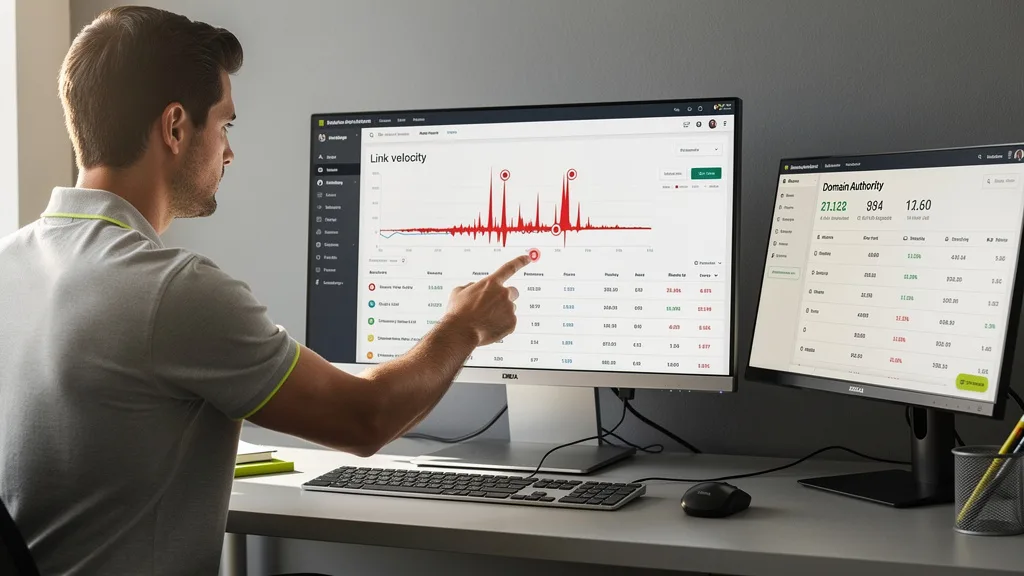
- Unnatural Link Velocity: Check the domain’s history of referring domains. A sudden, massive spike in new links over a short period, followed by a plateau or decline, is a classic sign of a spam campaign. Legitimate authority is built gradually over time.
- Poor Anchor Text Diversity: A natural backlink profile has a mix of anchor texts, including branded, naked URL, and generic anchors. If a domain’s anchors are overwhelmingly exact-match commercial keywords, it’s a strong indicator of manipulation.
- No Historical Traffic: Use Semrush or Ahrefs to check the domain’s historical organic traffic. A domain with a DA of 50+ but zero history of ranking for any keywords or receiving organic traffic is highly suspicious. Real authority attracts real visitors.
How to Check the Authority of Multiple Domains at Once
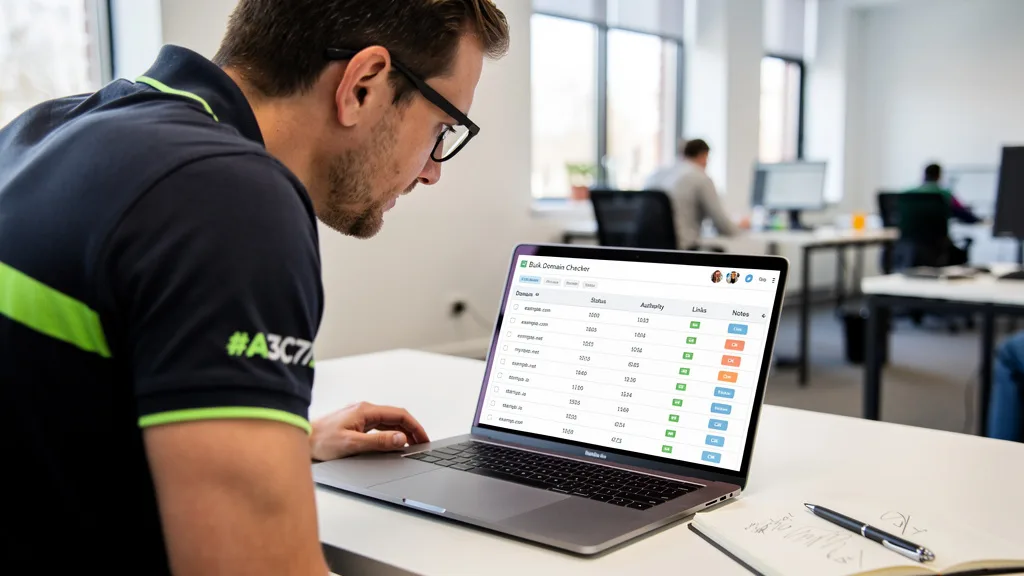
If you are an agency, a domain investor, or a PBN builder, you often need to evaluate dozens or even hundreds of domains at a time. Checking them one by one is inefficient and time-consuming. Fortunately, most major SEO tool suites offer bulk analysis features designed specifically for this purpose. These tools allow you to quickly sift through large lists of potential domain acquisitions to find the hidden gems.
Most bulk authority checkers work in a similar fashion. You can typically paste a list of up to 200 URLs or upload a CSV file containing thousands of domains. The tool will then crawl the list and return key metrics for each domain in a clean, exportable table. This usually includes metrics like DA/DR/AS, the number of referring domains, total backlinks, and sometimes even traffic estimates. Tools like Moz Pro, Ahrefs’ Batch Analysis, and Semrush’s Bulk Domain Analysis are the industry leaders for this task. This process is essential when you buy PBN sites or are evaluating large expired domain lists.
Understanding the Cost of Premium Domain Authority Checkers
While free tools are great for quick checks, serious SEO professionals and domain buyers need the comprehensive data provided by premium tools. These paid subscriptions offer more than just a single score; they unlock a wealth of data essential for making informed investment decisions. This includes full backlink profiles, historical data, anchor text analysis, and competitive insights.
As of 2026, the leading SEO platforms like Ahrefs, Semrush, and Moz Pro typically start their subscription plans at around $99 per month. More advanced plans with higher limits, API access, and additional features can range from $199 to over $999 per month. While this may seem like a significant expense, it should be viewed as an investment. The cost of one bad domain purchase, in terms of both money and wasted time, can easily exceed the annual cost of a subscription. These tools provide the deep-dive analytics necessary to verify a domain’s quality and avoid costly mistakes.
“In 2026, relying on a single authority score without deep-diving into the backlink profile is a recipe for disaster. A premium tool isn’t a cost; it’s insurance against buying a worthless or toxic domain that could torpedo your entire SEO strategy.” aged domain.
Key Takeaways
Mastering how to check domain authority before you buy a domain is a non-negotiable skill for anyone serious about SEO. It protects your investment and sets your projects up for success. Here are the most critical points to remember:
- Authority is a Predictor: Domain authority scores (DA, DR, AS) are not used by Google but are powerful predictors of a site’s ability to rank based on its backlink profile.
- Use Multiple Tools: Never rely on a single metric. Compare DA, DR, and AS to get a more balanced view of a domain’s strength.
- Beware of Fake Scores: Always investigate the backlink profile for red flags like spammy links, unnatural link velocity, and poor anchor text diversity. A high score can be easily manipulated.
- Context is Key: A “good” score is relative to your industry and competitors. A DA of 30 might be excellent in a small niche but weak in a highly competitive one.
- Go Beyond the Score: The score is just the starting point. The real value is in the quality and relevance of the referring domains. Always perform a manual review of the top backlinks.
Frequently Asked Questions
What is the difference between domain authority and page authority?
Domain Authority (DA) and Page Authority (PA) are both metrics developed by Moz, but they measure authority at different levels. Domain Authority predicts the ranking strength of an entire website or domain. It aggregates the link equity of all pages on the site to give a single, holistic score for the domain as a whole.
Page Authority, on the other hand, predicts the ranking strength of a single, specific page. A website’s homepage might have a very high PA, while a new blog post on the same site will start with a low PA. While a high DA often correlates with pages on that site having high PA, it’s not always the case. A single page can acquire powerful backlinks and achieve a high PA even on a domain with mediocre DA.
Does Google use Domain Authority as a direct ranking factor?
No, Google does not use Domain Authority (or any other third-party metric like Ahrefs’ DR or Semrush’s AS) as a direct ranking factor. Google representatives have repeatedly confirmed this. These metrics are created by SEO software companies to model Google’s ranking algorithm, but they are not part of the algorithm itself.
However, DA is highly correlated with the factors that Google *does* use, primarily the quantity and quality of backlinks pointing to a site. A high DA is generally the result of having a strong backlink profile, which is a major ranking signal for Google. Therefore, while DA itself isn’t a ranking factor, it serves as a very useful proxy for assessing a site’s ranking potential.
How long does it take for a domain’s authority to increase?
Increasing a domain’s authority is a long-term process that requires consistent effort. There is no fixed timeline, as growth depends entirely on the pace and quality of your link-building efforts. Gaining your first few points, from DA 1 to 10, might take a few months of acquiring foundational links.
Moving up the logarithmic scale becomes progressively harder. Going from DA 30 to 40 could take a year or more of dedicated, high-quality link building. It requires earning links from other authoritative and relevant websites. Rapid, unnatural increases are often a sign of spammy tactics that will likely be devalued by search engines over time. Sustainable growth is slow and steady.
Can a domain with a low authority score still be a good purchase?
Absolutely. A low authority score is not necessarily a deal-breaker, especially if the price is right. A domain with a low DA might be a brand new registration or an old domain that has been sitting unused. If the domain has a clean backlink history (or no history at all), a memorable name, and relevance to your niche, it can be an excellent blank slate to build upon.
The key is to investigate *why* the score is low. If it’s low because of a history of spam or a Google penalty, you should avoid it. But if it’s simply new or has been dormant, it can be a great value. You can build its authority from the ground up with a solid content and link-building strategy, like using a professional PBN backlinks service to create a strong foundation.
What key factors influence a domain’s authority score?
A domain’s authority score is primarily influenced by its backlink profile. While each tool’s algorithm is proprietary, they all revolve around a few core principles related to inbound links. The most significant factor is the number of unique linking root domains. Getting 100 links from one website is far less valuable than getting one link from 100 different websites.
The second major factor is the quality of those linking domains. Links from high-authority, trusted, and topically relevant websites pass significantly more value and have a much greater impact on your score than links from low-quality or irrelevant sites. Other contributing factors can include the total number of backlinks and, in the case of metrics like Semrush’s AS, signals like organic traffic and keyword rankings.
Conclusion
Ultimately, learning how to check domain authority is an essential defense against making a poor investment. While the score itself is just a number, the process of investigating it forces you to analyze the domain’s backlink profile, history, and overall health. This due diligence is what separates a successful domain acquisition from a costly mistake. Always use a combination of tools, look beyond the score to the quality of the links, and trust your analysis over a seller’s claims. This methodical approach will ensure the domains you acquire become powerful assets in your SEO arsenal.
Ready to leverage the power of high-authority domains without the guesswork? We provide safe, high-DA PBN backlinks from hand-selected aged domains that deliver real ranking improvements. For SEO professionals and agencies in competitive niches, our network is the key to fast, sustainable results. Get Started
If you want help turning this into a concrete plan for your site or team, take the next step below to apply How to Check Domain Authority Before You Buy a Domain with confidence.
Ready to act on How to Check Domain Authority Before You Buy a Domain? Get Started — tell us your goal, and we will help you pick the highest-leverage next step so you are not guessing alone.