

When you’re investing in a Private Blog Network (PBN), is a high Domain Authority score the golden ticket to ranking success, or a vanity metric that could lead you astray? Navigating the world of PBNs requires a keen eye for detail, as the difference between a powerful asset and a toxic liability often comes down to understanding the metrics that truly matter.
A good DA score for PBN domains typically falls between 20 and 30, offering a strong balance of authority and value. However, DA is just one piece of the puzzle. A truly effective PBN domain must also have a high Trust Flow (TF), a relevant backlink profile, and a low Spam Score to ensure it’s a safe and powerful asset for your SEO campaigns in 2026.
Domain Authority (DA) is a search engine ranking score developed by Moz that predicts how likely a website is to rank on search engine result pages (SERPs). Scored on a logarithmic scale from 1 to 100, a higher DA corresponds to a greater ability to rank. For PBNs, DA serves as a quick, initial gauge of a domain’s historical power. An aged domain with a high DA likely had a strong backlink profile at some point, meaning it has link equity that can potentially be passed to your money site.
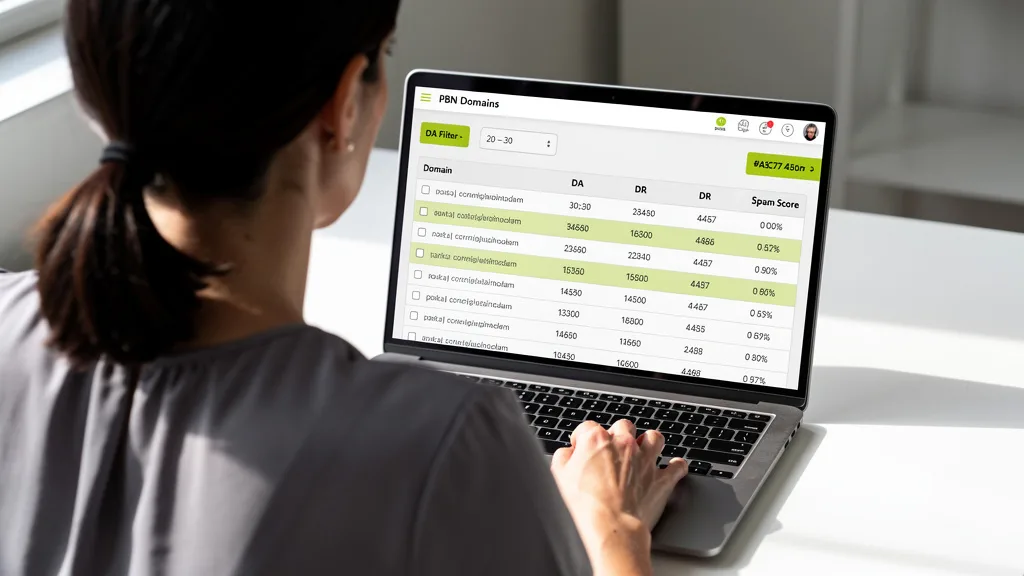
However, it is crucial to understand that DA is a third-party, predictive metric, not a ranking factor used by Google. It is calculated by evaluating multiple factors, including the quantity and quality of linking root domains. While a high DA is a good starting point for identifying potentially powerful PBN domains, it doesn’t tell the whole story about the domain’s health, history, or safety. Relying on it alone is a common and costly mistake.
Determining what is a good DA score for PBN domains depends on your goals, budget, and the competitiveness of your niche. While a higher number seems better, the reality is more nuanced. The key is to find the right balance of power, safety, and cost. A domain’s DA is best understood by breaking it down into tiers, each with its own set of benefits and risks.

For most SEO professionals, the goal is not to find the absolute highest DA but to find a domain with sufficient, clean authority to influence rankings without raising red flags. A domain that has been carefully vetted across multiple metrics is always superior to a high-DA domain with a questionable past. Let’s explore the common DA ranges you will encounter.
DA 10-20: Entry-Level and Potentially Risky
PBN domains with a Domain Authority between 10 and 20 represent the entry level of the market. These domains often have a weaker backlink profile or are younger expired domains that didn’t accumulate significant authority before being dropped. While they can provide a minor SEO boost for low-competition keywords, they carry a higher degree of risk. Their limited power may not be enough to move the needle in competitive industries like finance or iGaming.
These lower-DA domains require extra scrutiny. You must investigate why their authority is low and ensure they haven’t been subjected to spammy link-building tactics in the past. They can sometimes be useful for building a diversified link profile or as part of a tiered link-building strategy, but they are generally not recommended for direct links to your primary money site.
DA 20-30: The Sweet Spot for Value and Power
For many SEO campaigns, the DA 20-30 range is the sweet spot. Domains in this tier have established, demonstrable authority and a backlink profile strong enough to pass significant link equity. They are powerful enough to generate noticeable ranking improvements, even in moderately competitive niches, without commanding the premium price of top-tier domains.
This is the ideal range when you need reliable performance and a solid return on investment. A domain with a DA of 25, a clean history, and a good Trust Flow score is a far better asset than a DA 40 domain with a high spam score. When purchasing PBN links, focusing on this tier provides a perfect blend of power and cost-effectiveness, making it a strategic choice for consistent growth.
DA 30+: High-Tier Domains That Require Vetting
Domains with a DA of 30 or higher are considered high-tier assets in the PBN world. These are often powerful, well-aged domains that can deliver rapid and substantial ranking improvements. They are particularly sought after for campaigns in the most competitive niches, where every ounce of authority counts. However, their power comes with a significant caveat: they demand the most rigorous vetting process.
You must ask why a domain with such high authority was allowed to expire. It could have a hidden manual penalty, a history of abuse, or a toxic backlink profile that isn’t immediately obvious. While we offer premium PBN packages using DA 50+ domains, each one undergoes an exhaustive manual review to ensure it is 100% clean and safe before being added to our network.
Beyond DA: Essential PBN Metrics to Track
Focusing solely on Domain Authority is a rookie mistake that can lead to poor results and wasted investment. A sophisticated PBN buyer looks at a dashboard of metrics to get a complete picture of a domain’s health and power. To build a truly algorithm-proof PBN, you must cross-reference DA with other key indicators from different tool providers. This multi-metric approach helps you identify genuinely powerful domains and avoid toxic ones disguised by a single vanity metric.
“Focusing solely on Domain Authority is like judging a car by its paint job. You have to look under the hood at metrics like Trust Flow and the backlink history to know if you’re getting a reliable engine or a lemon.”

The three most important metrics to analyze alongside DA are Domain Rating (DR) from Ahrefs, Trust Flow (TF) from Majestic, and Spam Score from Moz. Each provides a unique perspective on the domain’s backlink profile and overall quality. Understanding how they interrelate is the key to making smart PBN investments.
| Metric | Provider | What It Measures | Ideal for PBNs |
|---|---|---|---|
| Domain Authority (DA) | Moz | Overall ranking potential based on link profile (quantity & quality). | 20-30+ |
| Domain Rating (DR) | Ahrefs | Strength of a website’s backlink profile on a 100-point scale. | 20-40+ |
| Trust Flow (TF) | Majestic | Quality and trustworthiness of links pointing to a site. | 15+ (and higher than CF) |
| Spam Score | Moz | Percentage of sites with similar features that have been penalized. | 1-4% (the lower, the better) |
Domain Rating (DR): The Ahrefs Authority Metric
Domain Rating (DR) is Ahrefs’ proprietary metric for measuring the strength of a website’s backlink profile. Like DA, it operates on a 100-point logarithmic scale. However, DR focuses exclusively on the quantity and quality of backlinks pointing to a domain, making it a pure reflection of link equity according to Ahrefs’ index. It is an excellent metric to use as a cross-reference against Moz’s DA. How to Find Good Domains.
Ideally, a domain’s DA and DR scores should be relatively close. A significant discrepancy can be a red flag. For instance, a high DA but a very low DR might indicate that the domain’s authority comes from sources that Moz values but Ahrefs does not, or that its link profile has recently degraded. Conversely, a high DR and low DA could point to a newer surge in links that Moz’s index hasn’t fully processed. Investigating these differences is a crucial part of due diligence.
Trust Flow (TF): Majestic’s Trustworthiness Score
Trust Flow (TF), a metric from Majestic, is arguably one of the most important indicators for PBN quality. Unlike DA or DR, which measure overall authority, TF specifically measures the trustworthiness of a domain based on the quality of its backlinks. It calculates how close a domain is to a manually curated seed set of trusted websites. A link from a high-TF site passes more trust than a link from a low-TF site.
For PBNs, a high TF is a strong signal of a clean and authoritative history. You should also compare it to Majestic’s other metric, Citation Flow (CF), which measures link quantity. A healthy domain has a TF/CF ratio close to 1 or at least above 0.5. A domain with a high CF and a very low TF is a classic sign of spam, indicating it has a large number of low-quality links.
Spam Score: Moz’s Red Flag Indicator
Moz’s Spam Score is a vital negative metric that should never be overlooked. It represents the percentage of sites with features similar to the one being analyzed that Moz has found to be penalized or banned by Google. The score is broken down into 27 potential red flags, such as a low number of pages, an abnormal link profile, or a high ratio of external links to content.
A low Spam Score is essential for a safe PBN. While a score of 1-4% is generally considered low-risk, anything higher requires a deep investigation. A score in the red (typically above 10%) is an immediate deal-breaker. Using a domain with a high Spam Score to link to your money site is like playing with fire; you are actively inviting a Google penalty.
Why a Low Spam Score Is a Non-Negotiable Factor
While high authority metrics like DA and DR are appealing, a low Spam Score is the most critical factor for the long-term safety and viability of your PBN. A PBN is only effective as long as it remains undetected and unpenalized by Google. Linking from a domain that Google views as spammy directly connects your money site to a toxic neighborhood, effectively telling algorithms that your site is also guilty by association.
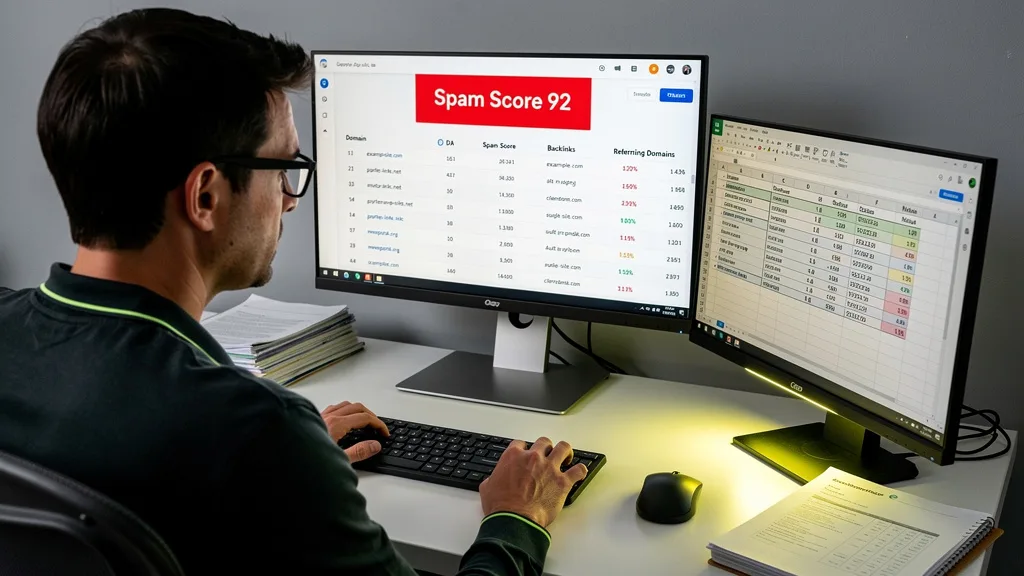
This can result in devastating consequences, from a sharp drop in rankings to a full manual action that de-indexes your site. No amount of link equity from a high-DA domain is worth that risk. This is why professional PBN providers are obsessive about Spam Score. We automatically reject any domain with a score that indicates even a hint of risk, ensuring that every link you buy from us is a safe and sustainable investment in your site’s growth.
How to Vet PBN Domains for Quality and Safety
Vetting PBN domains is a forensic process that goes far beyond checking a few top-line metrics. To ensure you are acquiring a clean and powerful asset, you need to dig into its past and analyze its digital footprint. A systematic approach will help you spot red flags and avoid domains that could harm your SEO efforts. For a deeper dive into the acquisition process, you can learn more about How to Find Good Domains for your network.
Your vetting checklist should include a thorough review of the domain’s history, a deep analysis of its backlink profile, and checks for any signs of past penalties. This comprehensive audit is the only way to be confident in the quality of your PBN investment. This is the manual work that separates professional-grade PBNs from cheap, risky alternatives. You can also work with experts in buying PBN domains to handle this for you.
- Check Domain History: Use Archive.org’s Wayback Machine to view past versions of the website.
- Analyze Backlink Profile: Use tools like Ahrefs or Majestic to scrutinize every link for quality and relevance.
- Verify Niche Relevance: Ensure the domain’s past content and backlinks are relevant to your target niche.
- Look for Indexation Issues: Perform a `site:domain.com` search on Google to ensure the domain is indexed.
- Review Anchor Text: Check for spammy or over-optimized anchor text from its previous life.
Check the Domain’s History on Archive.org
The Wayback Machine at Archive.org is an indispensable tool for PBN vetting. It allows you to travel back in time and see what the website looked like before it expired. Your goal is to confirm that the site was a legitimate business, blog, or organization. Look for a clean history with consistent, quality content.
Red flags to watch for include sudden changes in language (e.g., from English to Chinese), the appearance of spammy content like pharma or casino ads, or evidence that the site was previously used as part of another PBN (often indicated by generic, low-quality articles). If the history is blank or looks suspicious, it’s best to walk away, no matter how good the metrics seem.
Analyze the Backlink Profile for Toxic Links
The heart of a domain’s authority lies in its backlink profile. Using a tool like Ahrefs, you must manually review the links pointing to the domain. You’re looking for signs of quality and relevance, not just quantity. A healthy profile consists of links from other reputable sites within a similar or related niche.
Be on the lookout for toxic links from spammy sources, such as irrelevant foreign-language sites, link farms, or domains known for selling low-quality links. Pay close attention to the anchor text distribution; a profile dominated by exact-match commercial keywords is a major red flag for past spam. A clean profile is essential if you plan to buy PBN domains with backlinks that pass real value.
Look for Signs of Previous Spam or De-indexing
One of the biggest risks with an expired domain is that it was dropped because it received a Google penalty. A simple way to check for a major penalty is to see if the domain is indexed in Google. A quick `site:yourdomain.com` search will tell you if Google still has pages from that domain in its index. If nothing shows up, the domain is likely de-indexed, making it worthless.
Even if it is indexed, look for other signs of spam. Did the domain have thousands of backlinks that have suddenly disappeared? Does its traffic history show a sudden, catastrophic drop to zero? These are all indicators that the domain was abused and subsequently penalized. Buying a penalized domain is the fastest way to destroy your PBN’s effectiveness and put your money sites at risk.
Common Mistakes When Evaluating PBN Domain Authority
When evaluating PBN domains, several common mistakes can lead to poor investments. The most frequent error is an over-reliance on a single metric, particularly Domain Authority. Seeing a high DA and making a purchase without further investigation is a recipe for disaster. This ignores the possibility that the domain could have a toxic backlink profile, a high spam score, or a history of abuse that a single number cannot reveal.
Another critical mistake is failing to check for niche relevance. Buying a high-DA domain that was formerly a knitting blog to promote a crypto casino is a clear red flag for Google’s algorithms. The disconnect between the domain’s historical context and its new purpose makes the link look unnatural and manipulative. To avoid these pitfalls, it’s often wise to consult a professional PBN backlinks service that performs this rigorous vetting for you.
Key Takeaways
Navigating the complexities of PBN domain metrics is essential for building a powerful and safe backlink portfolio. To ensure you make informed decisions, keep these key points in mind as you evaluate potential domains for your network in 2026.
- DA is a Starting Point: A good DA score for a PBN is typically 20-30, but this metric should only be the beginning of your analysis, not the end.
- Use a Multi-Metric Approach: Always evaluate DA alongside Domain Rating (DR), Trust Flow (TF), and Spam Score to get a complete picture of a domain’s health.
- Spam Score is Non-Negotiable: A low Spam Score (ideally under 5%) is the most critical factor for ensuring the safety and long-term viability of your PBN investment.
- History Matters: Use tools like Archive.org to investigate a domain’s past usage. A clean, relevant history is a strong positive signal.
- Vet the Backlink Profile: Manually analyze the domain’s incoming links to ensure they are from quality, relevant sources and not from toxic or spammy sites.
- Professional Vetting Saves Time and Risk: Partnering with a trusted PBN provider eliminates the guesswork and ensures every domain you use is pre-vetted for quality, power, and safety.
Frequently Asked Questions
Is a Domain Authority of 20 considered good for a PBN?
Yes, a Domain Authority of 20 is generally considered a good starting point for a PBN domain. It indicates that the domain has some established authority and a backlink profile capable of passing link equity. For many niches, a DA 20 domain can provide a noticeable boost in rankings, especially when its other metrics, like Trust Flow and Spam Score, are also healthy.
However, its effectiveness depends on the competition. For a low-competition local business, a DA 20 link can be very effective. For a highly competitive global niche like online gaming, you may need domains with higher authority to see significant movement. A DA 20 domain is a solid, cost-effective asset when vetted properly.
What is a good spam score for a PBN domain?
A good spam score for a PBN domain is as low as possible, ideally between 1% and 4%. This range, often shown in green by Moz’s tools, indicates a very low risk of the domain being associated with spammy characteristics. It suggests the domain has a natural link profile and has not engaged in manipulative tactics that could attract a Google penalty.
Any score above 5-10% should be treated with extreme caution and warrants a deep manual review. A score in the red (often 11% or higher) should be considered an absolute deal-breaker. The primary goal of a PBN is to pass authority safely, and a high spam score directly jeopardizes that safety.
Which metric is more important for PBNs: DA or DR?
Neither DA (Domain Authority) nor DR (Domain Rating) is definitively more important than the other; they are best used together as complementary metrics. DA from Moz incorporates more signals beyond just backlinks, while DR from Ahrefs is a purer measure of backlink profile strength. A healthy domain will typically have similar DA and DR scores.
If forced to choose, many experienced SEOs lean slightly towards DR because Ahrefs has a larger and more frequently updated link index. However, the most prudent approach is to look at both. A significant discrepancy between the two is a red flag that requires further investigation into the domain’s backlink history and quality.
What actually drives a domain’s authority score?
A domain’s authority score, whether it’s Moz’s DA or Ahrefs’ DR, is primarily driven by its backlink profile. The single most important factor is the quantity and quality of unique linking root domains. Getting one link each from 100 different authoritative websites will boost your score far more than getting 100 links from the same website.
The authority of the linking domains is also critical. A single backlink from a high-authority site like a major news publication or university can have a greater impact than hundreds of links from low-quality blogs. Essentially, authority scores are a measure of a domain’s reputation on the web, as determined by who is linking to it.
Can a domain with a high DA still be a bad investment?
Absolutely. A domain with a high DA can be a terrible and even dangerous investment if its other metrics and history are poor. This is one of the most common traps for inexperienced PBN buyers. A high DA score can easily mask a toxic past, such as a high Spam Score, a penalty from Google, or a backlink profile full of irrelevant or spammy links.
For example, a DA 50 domain that was previously used for online gambling spam is worthless for a finance blog and could get your site penalized. Always look beyond the DA score. A comprehensive vetting process that includes checking the Spam Score, Trust Flow, backlink relevance, and domain history on Archive.org is non-negotiable.
Conclusion
In 2026, understanding what is a good DA score for PBN domains requires looking beyond a single number. While a DA in the 20-30 range offers a great starting point, true power and safety come from a holistic analysis of multiple metrics. By prioritizing a low Spam Score, a healthy Trust Flow, and a clean, relevant backlink history, you can ensure your PBN investments are both effective and sustainable. This comprehensive vetting is the key to leveraging PBNs for significant ranking gains without risking penalties.
Vetting PBN domains is a complex and time-consuming process where mistakes can be costly. Our team of experts manually vets every domain in our network, ensuring it has a clean history, powerful metrics, and zero footprints. If you’re ready to build authority with PBNs you can trust, we’re here to help. Get Started
If you want help turning this into a concrete plan for your site or team, take the next step below to apply What Is a Good DA Score for PBN Domains with confidence.
Ready to act on What Is a Good DA Score for PBN Domains? Get Started — tell us your goal, and we will help you pick the highest-leverage next step so you are not guessing alone.