Buy backlinks for SEO is the subject of more misinformation, more conflicting advice, and more quietly successful campaigns than almost any other practice in search engine optimisation. This guide is about what actually works: when paid link building delivers the ranking improvements it promises, when it fails or backfires, how to structure a link profile that earns rankings without earning penalties, and where PBN links, niche edits, and guest posts each fit into a complete link building strategy. This is the most comprehensive guide on this site — structured as both a buying guide and a reference resource.
Key Takeaways
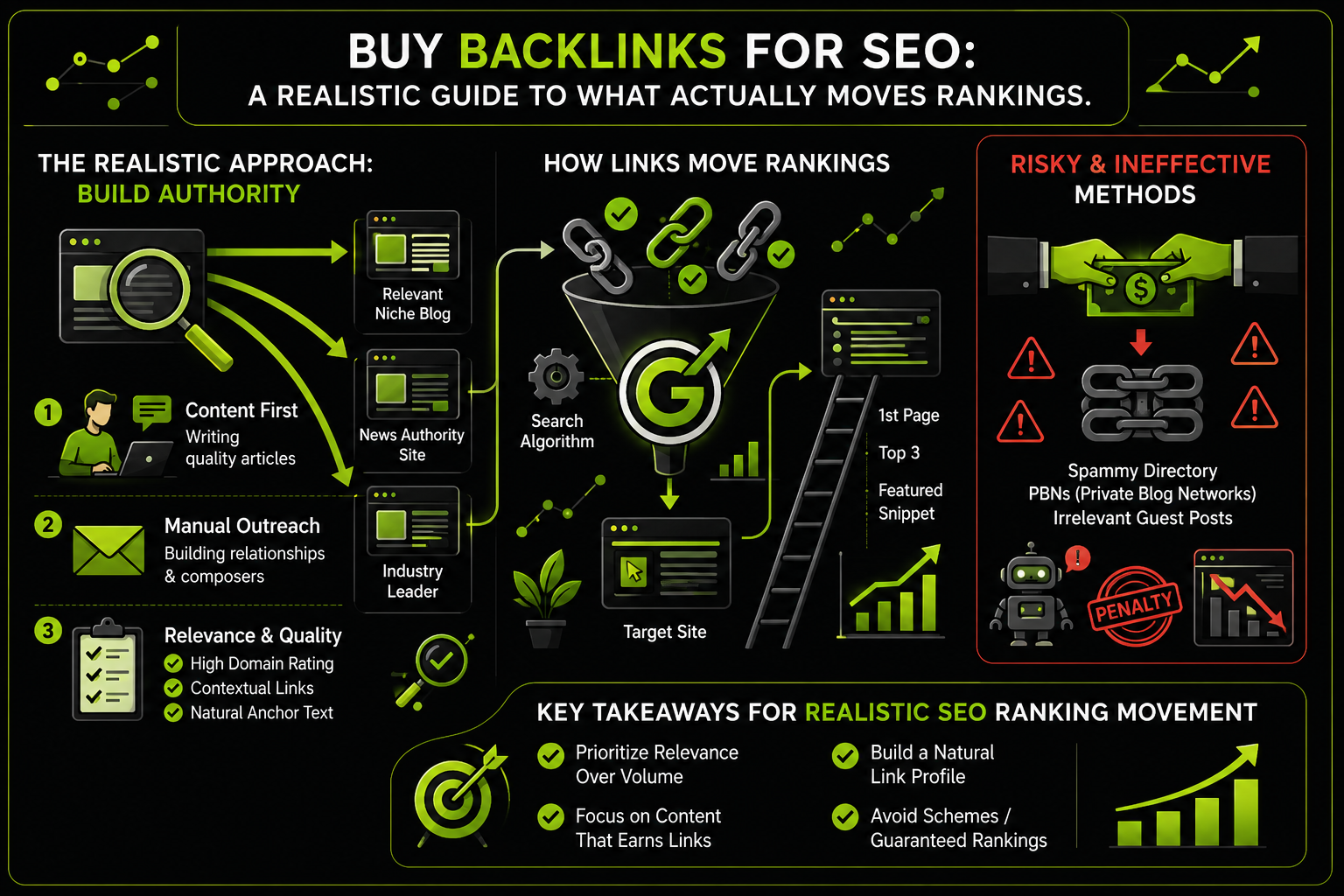
- Paid link building works when links are topically relevant, from domains Google trusts, with natural anchor text — and fails when those conditions are absent.
- Link velocity matters more than most buyers realise — sudden spikes attract algorithmic review regardless of individual link quality.
- PBN links are most effective as the mid-layer of a three-tier link profile: below high-authority editorial links and above lower-authority niche links.
- The safest paid link building is the kind genuinely hard to distinguish from organic — topically coherent, naturally distributed, mixed in anchor type and source domain profile.
When Buying Backlinks Works and When It Does Not
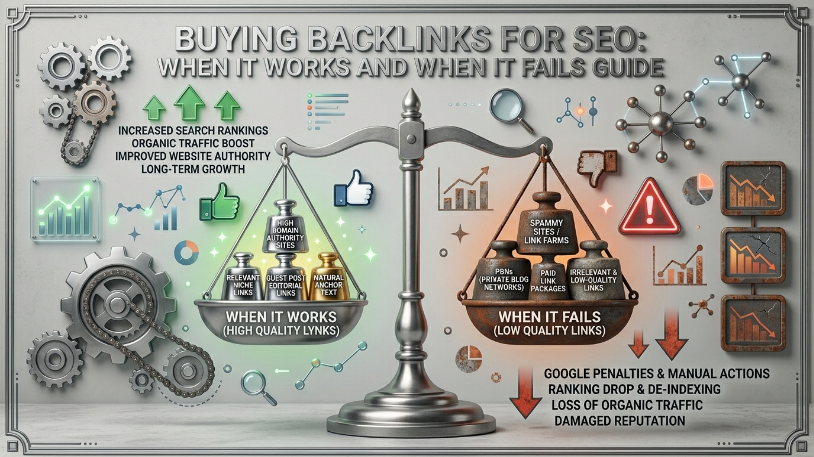
It works when: the target page has strong on-page fundamentals; the link gap to the competition is bridgeable; the links are topically coherent; and the anchor text mix reflects natural diversity. It fails when: the page is not indexed or has crawl issues; the target keyword is structurally dominated by results Google never moves; exact-match anchor saturation is used; or link velocity spikes suddenly.
When It Works
The target page has strong on-page fundamentals. A page with clear topical focus, comprehensive coverage, good E-E-A-T signals, and clean technical SEO will respond strongly to link building. The same page with thin content, poor title tags, or buried under slow load times will not respond reliably regardless of link quality.
The link gap to the competition is bridgeable. If the #1 ranking page has 400 referring domains and you have 30, paid link building can close that gap over time. If the #1 page is a government domain or a DR90 authoritative resource that has accumulated links over 15 years, the gap may not be practically bridgeable with paid links alone.
Links are topically coherent. Links from domains covering topics related to the target page pass stronger relevance signals than links from unrelated domains. A link from a financial services blog to a mortgage calculator page is functionally superior to a link from a cooking site to the same page, even at equivalent DR.
The anchor text mix reflects natural diversity. A link profile where 60–70% of anchors are branded or generic, with partial-match making up another 20%, and exact-match comprising under 10–15%, resembles earned link acquisition. This profile earns rankings stably.
When It Doesn’t Work
The page is not indexed or has crawl issues. Links cannot help a page Google is not finding, crawling, or indexing properly. Resolve technical issues before investing in link building.
Target keyword is dominated by results Google never moves. Government pages, major brand homepages, and established Wikipedia entries in some niches are structurally immune to standard link building interventions. If the top three results have not changed in three years despite the competitive landscape, this is a signal.
Campaign uses exact-match anchor saturation. A link profile with 40% exact-match keyword anchors is a manual review waiting to happen. This is the single most common cause of link building campaigns that produce temporary ranking spikes followed by penalties.
Link velocity spikes suddenly. Acquiring 50 links in one week after a month of none creates an unnatural velocity signature that triggers algorithmic scrutiny.
How Google Evaluates Paid vs. Organic Links
Google’s approach to paid link detection has evolved from simple pattern matching to a combination of manual review, algorithmic signals, and machine learning classifiers. Understanding what it looks for is essential for structuring paid link campaigns that work without triggering action.
What Google’s Spam Systems Look For
Unnatural anchor text patterns. A cluster of exact-match keyword anchors from unrelated sites is the most consistent manual review trigger. Google’s link spam systems are specifically trained to identify anchor text that looks purchased rather than editorially chosen.
Footprint consistency across linking sites. If multiple linking sites share the same hosting block, the same registrar, the same WordPress theme, or the same content templates, they are more likely to be algorithmically associated and flagged as a coordinated link scheme.
Link velocity anomalies. A domain that receives zero new backlinks for months and then acquires 30 in one week has an acquisition pattern that does not match organic reference accumulation. Consistent velocity over time — even at modest rates — is algorithmically safer.
No organic signals on linking pages. A page with no organic search traffic, no real audience, and no evidence of engagement placing a commercial link is a weaker candidate for genuine editorial status than a page with traffic, comments, and social signals.
What Reduces Detection Risk
- Topical relevance between the linking site’s content and the target page’s topic
- Natural anchor text diversity across the full link profile
- Gradual, consistent link velocity rather than burst-and-pause patterns
- Organic traffic on linking domains confirming Google’s trust in those sites
- Mixed link source types — PBN links alongside niche edits, editorial mentions, and citations
Link Velocity: How Fast Is Too Fast?
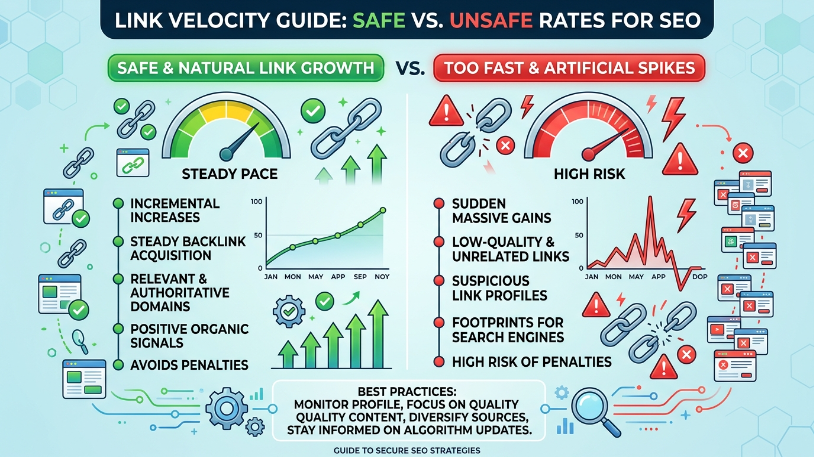
Link velocity — the rate at which new backlinks are acquired — is one of the most actionable risk management variables in paid link building. Getting it wrong is one of the most common causes of avoidable penalties.
Safe Velocity Guidelines by Competitiveness
| Site Type | Monthly Acquisition Rate | Notes |
|---|---|---|
| New site (0–6 months old) | 1–5 links/month | Establish organic footprint first |
| Emerging site (6–18 months) | 5–15 links/month | Gradual ramp is fine; avoid bursts |
| Established site (18+ months) | 10–30 links/month | Higher baseline makes velocity less suspicious |
| Competitive niche campaign | 15–40 links/month | Spread across 3–4 weeks, never all at once |
| High-competition national terms | 20–50 links/month | Match or slightly exceed competitor acquisition rate |
The Burst-and-Pause Problem
One of the most common link building patterns — ordering 20 links at once, waiting for results, then ordering another batch — creates an unnatural burst-and-pause velocity signature. Even if each individual link is high quality, the acquisition pattern itself is algorithmically anomalous.
The solution is to establish a consistent monthly baseline: a small number of placements every month, with periodic increases when competitive gaps require more aggressive campaigns. Consistency over time is algorithmically safer than equivalent link volumes acquired in concentrated bursts.
Anchor Text Distribution That Earns Rankings Safely
Anchor text is the dimension of paid link building that most directly determines whether a campaign earns rankings or earns penalties. The following distribution represents the profile of genuinely safe, ranking-stable link profiles in 2026.
| Anchor Type | Target % | Examples |
|---|---|---|
| Branded | 30–40% | Brand name, brand URL variants |
| Generic / navigational | 20–25% | click here, read more, visit site |
| Topical / semantic | 15–20% | link building service, SEO authority links |
| Partial match | 10–15% | quality PBN backlinks for SEO |
| Naked URL | 5–10% | https://domain.com |
| Exact match | 5–10% | buy PBN backlinks, buy backlinks for SEO |
How to Monitor Your Anchor Profile
Track every new link in a spreadsheet with the anchor text recorded. Calculate the percentage of each type before every new placement. When exact-match anchors approach 10%, stop adding exact-match and switch to branded or generic until the ratio drops.
For high-competition campaigns where exact-match anchors are tempting because of keyword specificity, consider partial-match variants instead: “best place to buy PBN backlinks” rather than “buy PBN backlinks” — similar topical signal, lower over-optimisation risk.
Domain Authority Mix: The Three-Layer Model
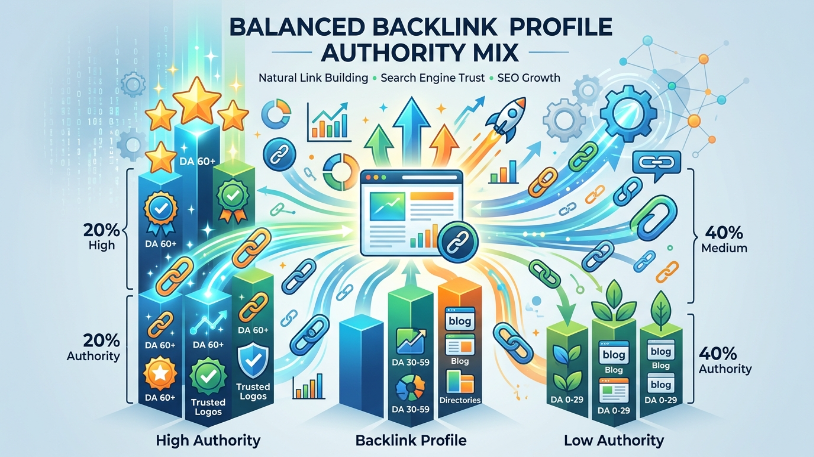
A link profile built entirely from one source type — all PBN links, or all guest posts, or all directory citations — is structurally artificial regardless of the individual link quality. Natural link profiles reflect diverse acquisition patterns because genuinely valuable content attracts references from many different types of sources.
Layer 1 — High-Authority Anchors (5–15%): DR50+ links from genuinely authoritative sources. These are the hardest to acquire but the most durable.
Layer 2 — Mid-Authority Topical Links (50–65%): DR20–50 topically relevant links. This is where PBN links operate as a primary tool.
Layer 3 — Low-Authority Topical Base (20–35%): DR10–25 links contributing topical density and profile diversity.
How PBN Links Fit
PBN links at DR20–50 are naturally mid-layer assets. They should not be the only type in a profile, but they are the most reliable way to build the mid-layer at scale, particularly in niches where editorial outreach is structurally limited.
Link Velocity: Safe Monthly Rates
| Site Type | Monthly Acquisition Rate |
|---|---|
| New site (0–6 months) | 1–5 links/month |
| Emerging site (6–18 months) | 5–15 links/month |
| Established site (18+ months) | 10–30 links/month |
| Competitive niche campaign | 15–40 links/month |
Risk Management: What Protects You From Penalties
Risk cannot be eliminated from paid link building — but it can be managed to levels that most serious SEO campaigns accept as a reasonable operating assumption.
The Four Practical Risk Reducers
1. Quality over volume. Five high-quality, topically relevant, traffic-bearing PBN links reduce risk more than fifty low-quality bulk links, even though the latter is cheaper per link. The probability of detection scales with the network quality and footprint consistency of the links, not just the volume.
2. Diversified anchor text from day one. The most common recoverable manual actions in paid link building are caused by anchor text over-optimisation. This is the most controllable risk variable and the one that requires the least additional spend to manage.
3. Gradual, consistent velocity. Monthly maintenance campaigns at sustainable rates are algorithmically safer than burst acquisitions regardless of individual link quality.
4. Maintained tracking and replacement protocols. Monitoring placements quarterly and replacing deindexed links quickly prevents the gradual decay of a link profile without your awareness — which can cause ranking declines that look like algorithm updates but are actually link attrition.
If a Manual Action Is Applied
Manual actions for unnatural link building are recoverable through Google’s reconsideration process, but the process is time-consuming and the outcome is not guaranteed. The safest approach is prevention: building a profile that genuinely looks difficult to classify as artificial because it largely isn’t — mixed sources, natural anchors, topical coherence, consistent velocity.
The 12-Month Link Building Framework
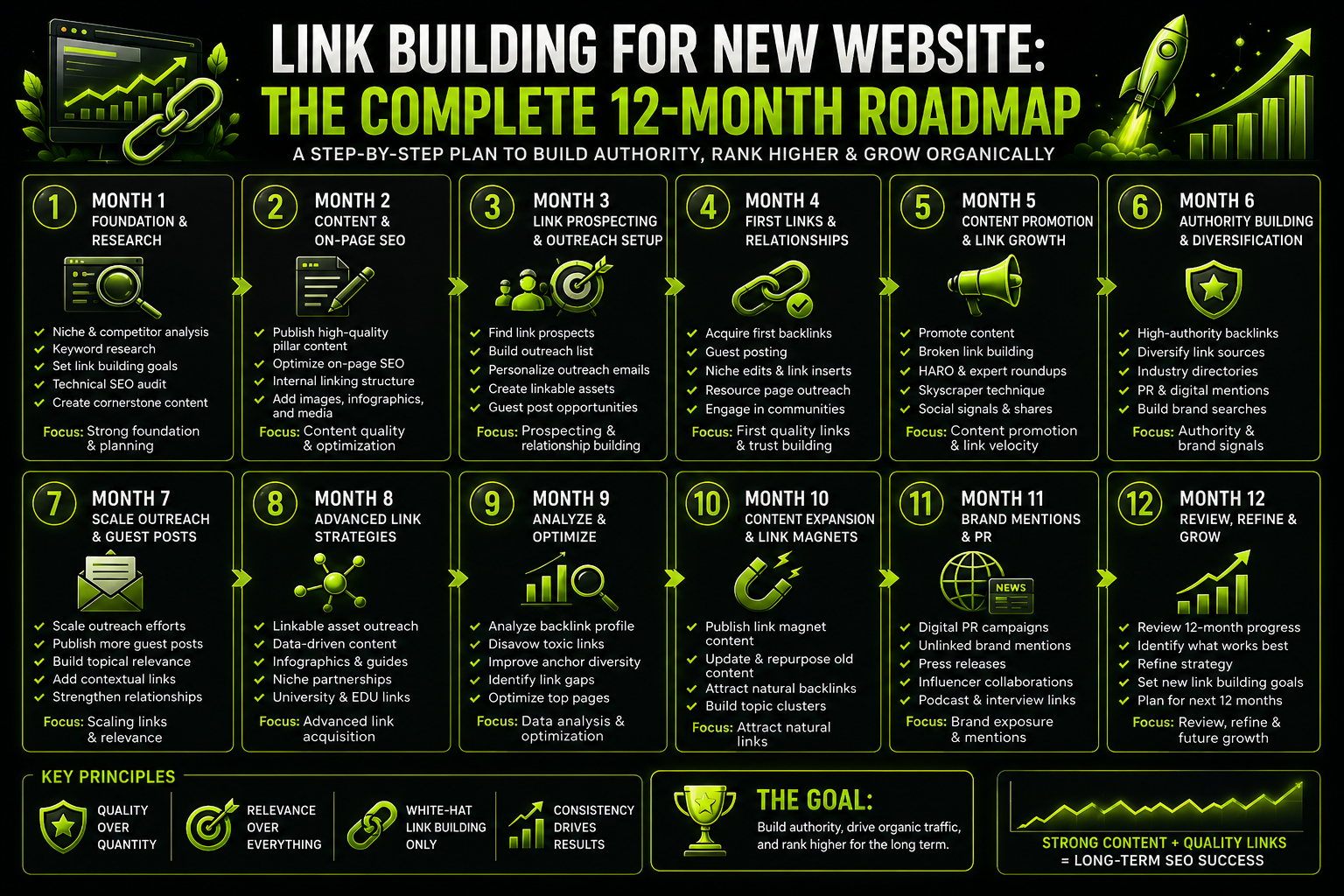
Months 1–2: on-page audit and baseline tracking. Months 3–4: 5–10 mid-tier PBN links with natural anchor mix. Months 5–6: 10–15 blog post links forming topical cluster. Months 7–8: 5–8 niche edits on aged pages plus higher-authority editorial attempts. Months 9–10: 15–20 mixed PBN and niche edit placements. Months 11–12: gap analysis and scale based on competitor profile comparison.
FAQ
Is buying backlinks for SEO against Google guidelines?
Yes. Google Webmaster Guidelines prohibit buying or selling links that pass PageRank. The practical risk level is significantly lower for high-quality, naturally-structured campaigns than for obvious bulk link schemes.
How many backlinks do I need to rank for a competitive keyword?
Compare your referring domain count to the top three ranking pages for your target keyword. Quality and topical relevance matter as much as the count.
What is the safest way to buy backlinks?
Topically relevant placements from domains with genuine organic traffic, diversified anchor text, and consistent velocity over time. The closer the profile looks to organically acquired links, the lower the detection risk.
How long does it take for bought backlinks to affect rankings?
Most quality placements begin affecting rankings 3 to 6 weeks after indexation. Competitive keywords may require 3 to 6 months of sustained link building.
Do bought backlinks work long term?
Quality permanent placements on well-maintained domains can contribute to rankings for years when the link profile is managed carefully and the underlying domain maintains its Google trust.
How much does it cost to buy backlinks for SEO?
Entry-level: £15–£60 per link. Mid-tier: £40–£150. Premium: £100–£500+. For competitive national terms, budget £500–£2,000/month for sustained mid-tier campaigns.
Conclusion
Buying backlinks for SEO in 2026 works when used correctly and fails when misapplied. The framework in this guide — on-page fundamentals first, appropriate velocity, natural anchor distribution, balanced authority mix, and consistent risk management — produces sustainable rankings in competitive niches. For a full-service buy backlinks for SEO programme covering PBN placements, niche edits, and topical authority building with full metrics transparency, explore the available options for your specific competitive context.
About the Author
Louis Dobbler is a PBN link building strategist and off-page SEO specialist at BuyPBNBacklinks, with deep expertise in private blog network construction, domain acquisition, and authority link campaigns across competitive verticals including iGaming, finance, legal, and SaaS.

Louis Dobbler is a PBN link building strategist and off page SEO specialist with deep expertise in private blog network construction, domain acquisition, and authority link campaigns. With years of experience working across competitive verticals including iGaming, crypto, finance, and CBD, Louis has helped hundreds of SEO agencies and affiliate marketers engineer rankings that hold through every Google core update.
At BuyPBNBacklinks, Louis oversees network quality, domain vetting, and campaign strategy ensuring every PBN backlink placed meets the highest standards for authority, footprint safety, and long term SEO performance.