Most link building conversations focus entirely on building links to a money site. Buy ten links, point them at your target page, track the rankings. That is Tier 1 link building — and while it works, it leaves one of the most effective ranking leverage points in SEO completely unused. Tier 2 link building — building links to your existing backlinks rather than directly to your site — is the method that separates practitioners who get good results from those who get exceptional ones. This guide explains how Tier 2 works mechanically, why it amplifies rankings more than adding equivalent Tier 1 links, which link types perform best at Tier 2, and how to structure a complete Tier 1 plus Tier 2 strategy that compounds over time.
What Is Tier 2 Link Building?
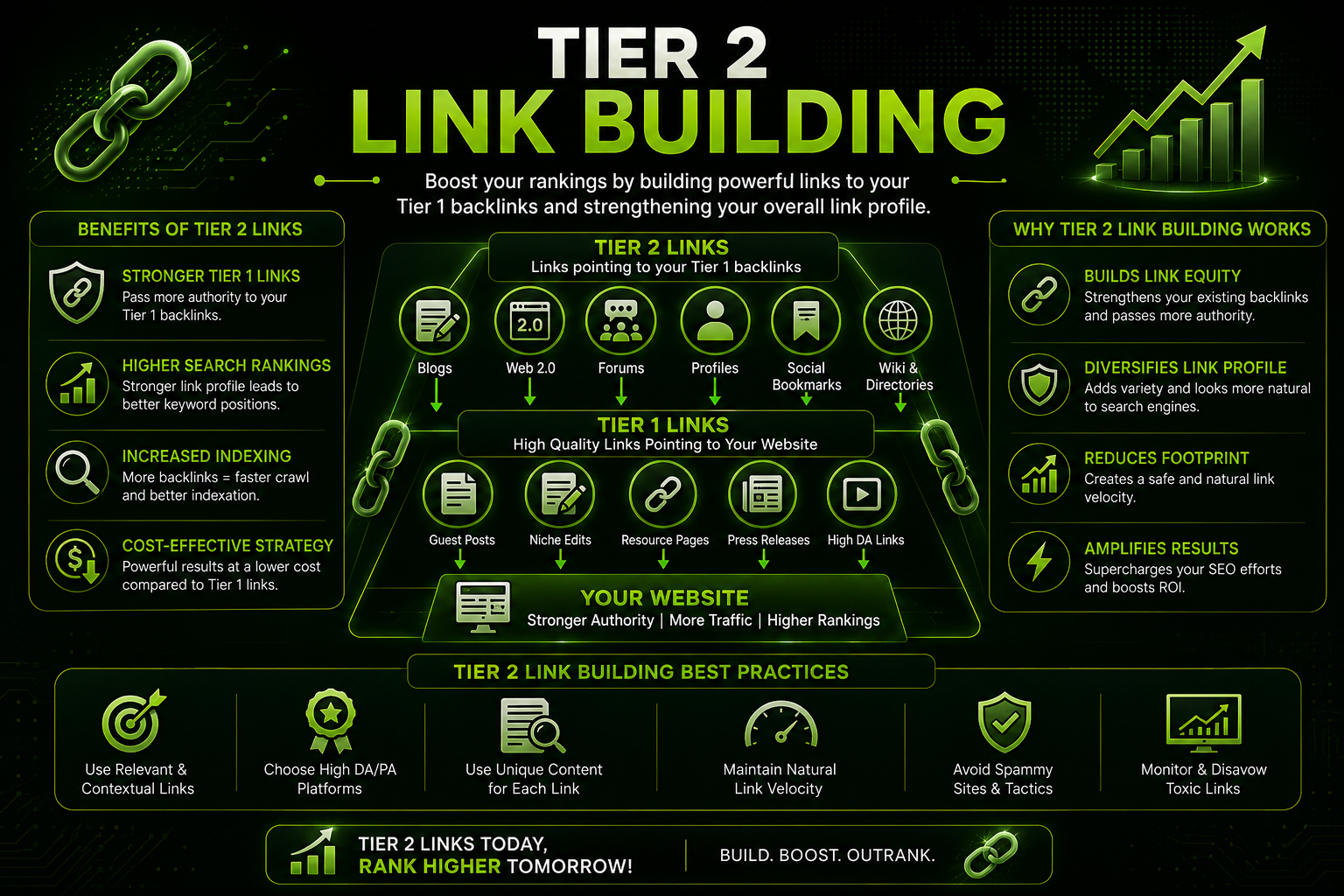
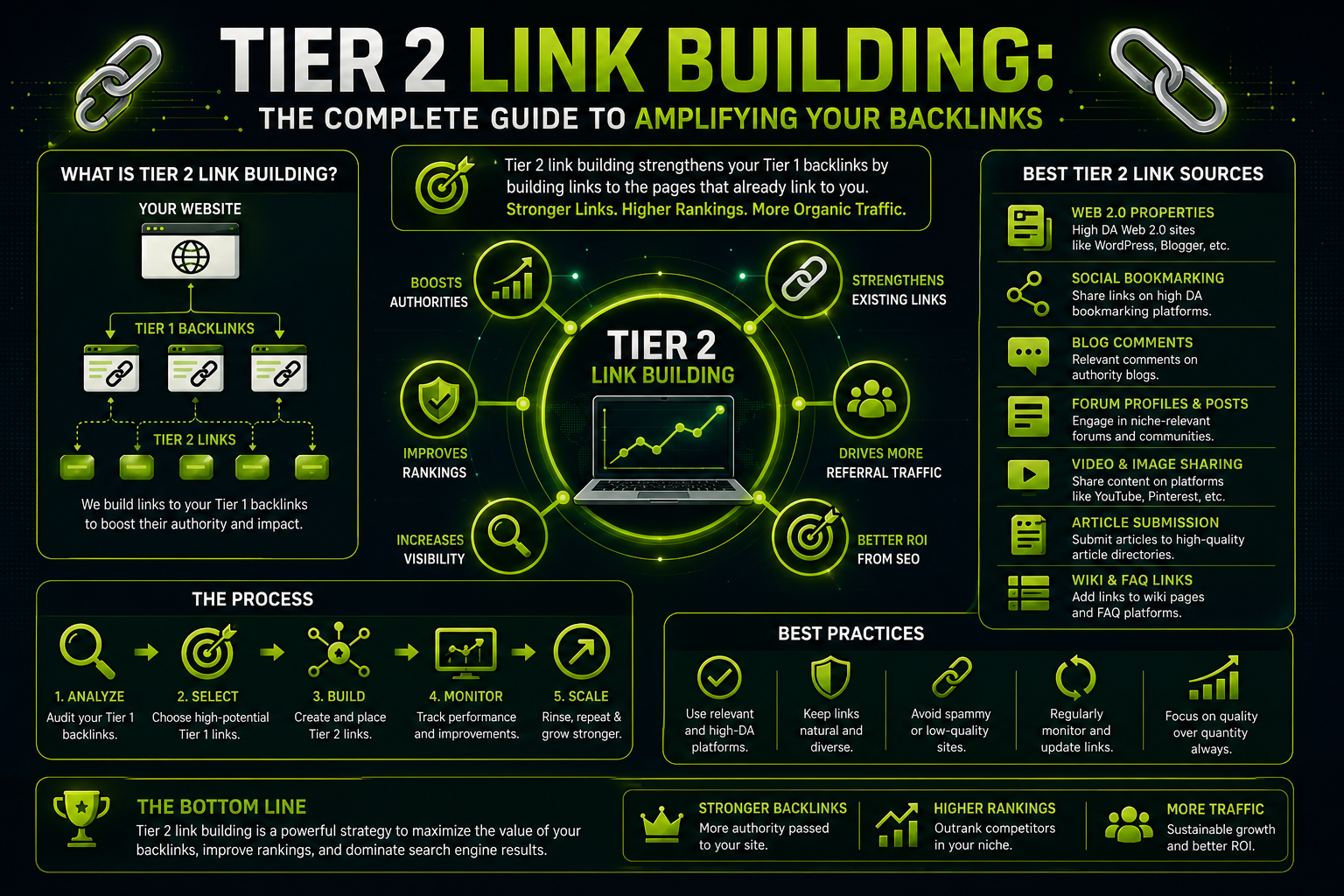
Standard link building (Tier 1): Other site links → Your money site.
Tier 2 link building: Other sites link → Your existing Tier 1 pages → Your money site.
The concept is simple but the implications are significant. When you publish a guest post on a DR 40 site and it links to your money site, the amount of PageRank that guest post page passes depends on how much authority that specific page has — not just the domain. A guest post page with zero other links pointing to it passes only a fraction of what it could. Point three to five quality links at that guest post page and its own page-level authority rises, which means it passes more authority through to your money site through the existing link.
You have not added a single new direct link to your money site. But your existing link is now working harder.
Why Tier 2 Link Building Works: The PageRank Mechanics
To understand why Tier 2 is so effective, it helps to think about how PageRank actually flows through a link chain.
Every webpage has a PageRank value. When a page links to another page, it passes a fraction of its own PageRank through that link — the fraction depends on how many outbound links the page has in total (fewer outbound links = more PageRank per link). The receiving page accumulates PageRank from all the links pointing to it and passes fractions of that accumulated total through its own outbound links.
This chain structure means that strengthening any node in the chain strengthens all the nodes downstream from it. Your guest post is a node between the DR 40 domain and your money site. Add authority to the guest post page and more authority flows through to your money site — even though you never touched the direct link between the guest post and your site.
A Concrete Example
Scenario A: You have a guest post on a DR 40 site, linking to your money site. The guest post page has no links pointing at it specifically. It passes, hypothetically, 3 units of PageRank to your money site.
Scenario B: Same guest post, same domain, same link. But now you have pointed five quality PBN links at the guest post page URL. The guest post page now has its own backlink profile. It accumulates additional PageRank from those five PBN links and passes a larger fraction through to your money site — say 7 units rather than 3.
You have doubled-plus the authority transfer from one Tier 1 link without changing anything about that link. That is the leverage of Tier 2.
Tier 1 vs Tier 2 vs Tier 3: Understanding the Full Stack
| Tier | Points At | Purpose | Quality Required | Cost Sensitivity |
|---|---|---|---|---|
| Tier 1 | Money site directly | Direct authority transfer | High — Google evaluates these directly | High — quality matters most here |
| Tier 2 | Tier 1 pages | Amplify Tier 1 authority | Medium — buffered from money site | Medium — quality still matters but threshold is lower |
| Tier 3 | Tier 2 pages | Amplify Tier 2 volume | Lower — two steps from money site | Low — quantity over quality appropriate here |
Most campaigns only need Tiers 1 and 2 to operate effectively. Tier 3 is used in highly aggressive campaigns in very competitive niches where the Tier 2 volume needs boosting. For the vast majority of SEO campaigns, a structured Tier 1 plus Tier 2 approach is sufficient to deliver competitive ranking results.
Which Link Types Work Best at Tier 2
PBN Blog Post Links — Best Overall Tier 2 Tool
PBN blog post links are the most effective Tier 2 link type for three reasons. First, they offer full anchor text control — you can point Tier 2 links at a guest post URL with anchors that reinforce the topical authority of that page, compounding the relevance signal it passes to your money site. Second, they are fast to deploy — a Tier 2 campaign of five to ten PBN links can be running within a week. Third, they are cost-effective at the scale Tier 2 requires — since you are building links to intermediate pages rather than money site pages directly, the per-link investment is justified by the amplification effect rather than needing each link to carry direct money site authority.
For guidance on what quality looks like when ordering these links, see our complete PBN buyer guide.
Web 2.0 Properties
Free publishing platforms — Medium, Tumblr, Blogger, WordPress.com — can be used as Tier 2 nodes that link to your Tier 1 pages. Their individual authority is moderate but they are easy to create, index quickly, and can be pointed at Tier 1 pages in volume. Web 2.0s work best as a supporting Tier 2 layer alongside PBN links rather than as the sole Tier 2 strategy.
Social Profile Links
Social profiles on LinkedIn, Twitter, Pinterest, and similar platforms that link to your Tier 1 pages contribute social signal diversity to the Tier 2 layer. While the direct PageRank passed by social links is debated, the crawl signals they create — directing Googlebot to your Tier 1 pages — help ensure those pages are indexed frequently and evaluated regularly.
Blog Comments and Forum Mentions
Topically relevant blog comments with links to your Tier 1 articles contribute modest Tier 2 authority while adding topical context. Quality matters here — a comment on a relevant, indexed, high-traffic blog passes more Tier 2 signal than fifty comments on spam blogs. Use this link type sparingly and only on genuinely relevant, active discussions.
Niche Edits on Related Pages
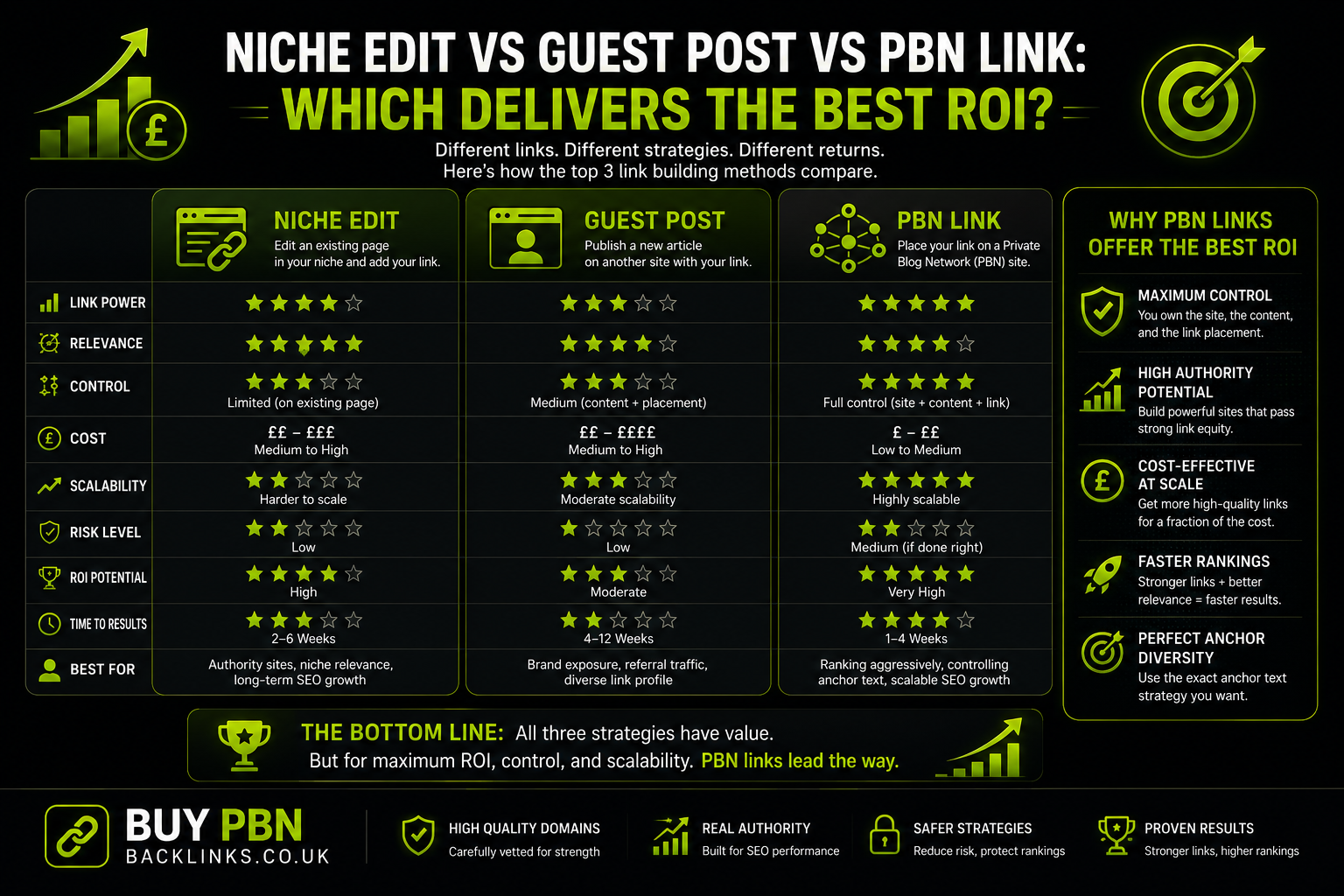
A niche edit — a link inserted into an existing article on an aged, indexed page — pointing at your Tier 1 guest post URL is a highly effective Tier 2 placement. It combines the aged page authority of a niche edit with the targeted amplification of a Tier 2 strategy. For more on niche edits see our guide on buy niche edits vs PBN links.
How to Structure a Tier 1 Plus Tier 2 Campaign
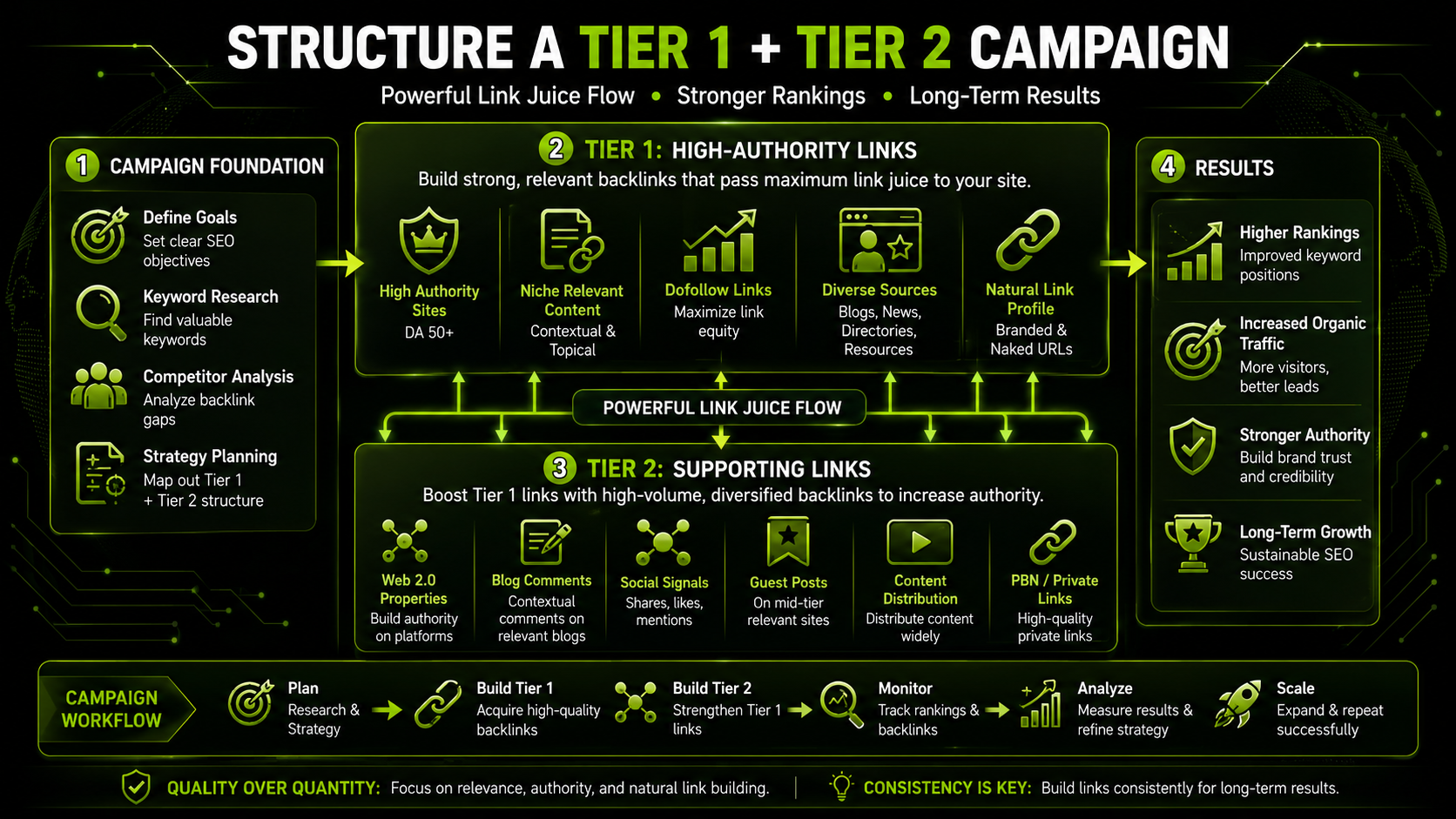
Step 1 — Build and Track Your Tier 1 Profile
Before adding any Tier 2 links, ensure your Tier 1 links are indexed and tracked. Every Tier 1 placement should be recorded with its page URL (not just the domain), anchor text, DR, organic traffic, and indexed status. The page URL is critical — your Tier 2 links point at specific page URLs, not domain homepages.
Step 2 — Prioritise Your Highest-Value Tier 1 Pages
Not every Tier 1 link needs Tier 2 amplification. Focus Tier 2 investment on the highest-value Tier 1 placements first — typically your DR 35 plus placements from editorial sites and high-quality PBN domains. These have the most potential authority to pass and will deliver the largest uplift from Tier 2 amplification.
Step 3 — Assign Tier 2 Link Volume Per Tier 1 Page
| Tier 1 Link Type | Domain DR | Recommended Tier 2 Links |
|---|---|---|
| Editorial guest post | DR 40–60+ | 8–15 Tier 2 links |
| Quality PBN placement | DR 30–50 | 4–8 Tier 2 links |
| Niche edit (aged page) | DR 25–45 | 3–6 Tier 2 links |
| Mid-tier PBN placement | DR 20–30 | 2–4 Tier 2 links |
| Directory or citation | DR 10–25 | 1–2 Tier 2 links (optional) |
Step 4 — Choose Anchor Text for Tier 2 Links
Tier 2 anchor text strategy differs slightly from Tier 1. Since Tier 2 links point at intermediate pages rather than your money site, you have two anchor text options:
Option A — Reinforce the Tier 1 page topic. Use anchors that relate to the topic of the Tier 1 article. If your guest post is about “link building strategies,” Tier 2 anchors like “link building guide” or “SEO link strategies” reinforce that page topical relevance and strengthen the signal it passes to your money site.
Option B — Use the Tier 1 page URL as a naked anchor. Naked URL anchors (the actual URL of the guest post) are natural, unoptimised, and contribute to the Tier 2 profile without any over-optimisation risk. A mix of 50% topical anchors and 50% URL anchors is a safe and effective Tier 2 anchor strategy.
Step 5 — Time Tier 2 Deployment After Tier 1 Indexation
Build Tier 2 links only after the Tier 1 page is confirmed indexed in Google. Pointing Tier 2 links at an unindexed page is wasted investment — Google cannot process the authority chain if the intermediate node is not in its index. Wait for indexation confirmation (typically one to three weeks after Tier 1 placement) before beginning Tier 2 deployment.
How to Buy Tier 2 Backlinks Cost-Effectively
The economics of Tier 2 link building are different from Tier 1. Because Tier 2 links are buffered from your money site by an intermediate page, the quality threshold is somewhat lower — you do not need DR 40 domains with 200 monthly organic visitors for every Tier 2 placement. The appropriate quality tier for Tier 2 links is:
| Tier 2 Link Quality | DR Range | Traffic | Price Range | Where to Use |
|---|---|---|---|---|
| Standard Tier 2 | DR 15–25 | Minimal | £15–£40 | Supporting lower-authority Tier 1 links |
| Quality Tier 2 | DR 25–40 | Some traffic | £35–£80 | Amplifying mid to high-authority Tier 1 links |
| Premium Tier 2 | DR 40+ | Consistent traffic | £60–£150 | Amplifying editorial and highest-authority Tier 1 links |
For most campaigns, standard to quality Tier 2 links at £20–£60 per placement deliver excellent amplification ROI when pointed at strong Tier 1 pages. The total Tier 2 budget is typically 30–50% of the Tier 1 budget, invested across three to five Tier 2 links per major Tier 1 placement. To evaluate any Tier 2 placement, apply the same verification steps in our backlink quality checklist.
Tier 2 Link Building for Different Scenarios
New Site — Months 3–6
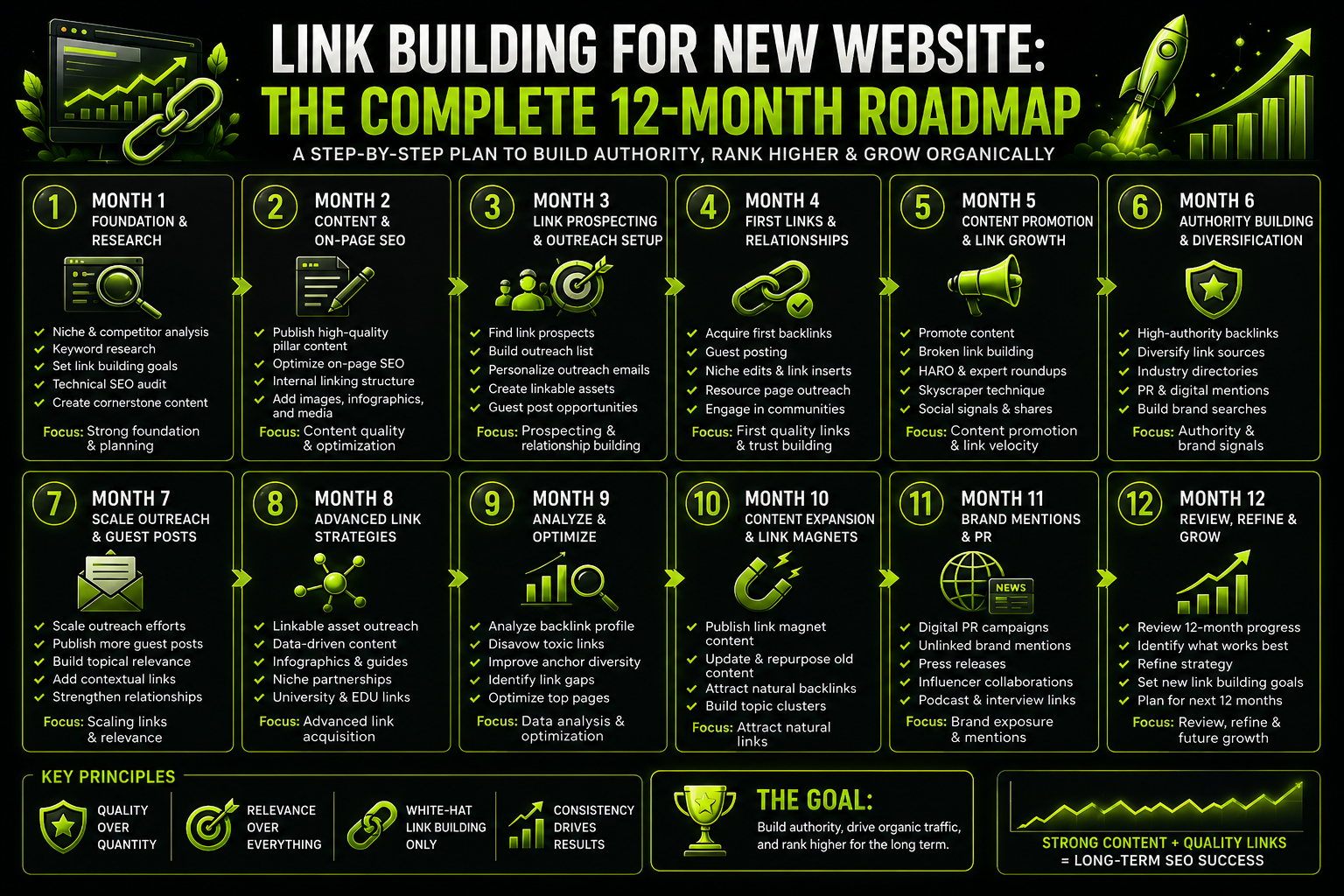
Add two to three Tier 2 links to your first Tier 1 PBN placements once they are indexed. This amplifies the authority of your early links without adding velocity pressure to your money site directly. The Tier 2 signal helps your Tier 1 pages build their own authority faster, which accelerates the authority transfer to your money site. See our full guide on link building for new websites for how this fits into a 12-month roadmap.
Stalled Campaign — Rankings Plateau
If rankings have plateaued after an initial link building push, Tier 2 amplification on existing Tier 1 links is often more effective than adding new Tier 1 links. The existing links may be under-delivering because their specific pages lack authority — Tier 2 targeting addresses this directly without adding money site link velocity.
Competitive National Keywords
For top-three rankings on competitive national keywords, a structured Tier 1 plus Tier 2 programme is typically required. Competitors in these positions almost always have Tier 2 support on their strongest editorial links, even if they have not explicitly built it — high-authority articles naturally attract links over time, which function as organic Tier 2. Deliberately building this layer accelerates the competitive catching up process.
Protecting Existing Rankings
Once a page achieves a top-three ranking, Tier 2 maintenance — adding one to two Tier 2 links per month to key Tier 1 pages — helps sustain that ranking against competitive pressure without the risk of over-linking the money site directly. This is a low-cost, low-risk method of defending competitive positions. For a broader strategy on how all link types fit together, see our buy backlinks for SEO guide.
Common Tier 2 Mistakes to Avoid
Pointing Tier 2 at the domain homepage instead of the specific Tier 1 page URL. The authority must flow to the specific page that contains the link to your money site — not to the domain in general. Always target the exact article or page URL, not the root domain.
Building Tier 2 before Tier 1 is indexed. An unindexed Tier 1 page cannot pass authority regardless of how many Tier 2 links point at it. Confirm indexation before deploying any Tier 2 budget.
Using only one Tier 2 link type. A Tier 2 profile consisting entirely of PBN links, or entirely of Web 2.0s, is less natural-looking than a mixed profile. Combine PBN links with web 2.0 properties, social signals, and occasional blog comment links for a diverse Tier 2 layer.
Ignoring anchor text at Tier 2. Generic or random anchor text at Tier 2 wastes the opportunity to reinforce the topical authority of Tier 1 pages. Take the same care with Tier 2 anchor selection as you do at Tier 1 — use topically relevant and URL anchors rather than generic phrases.
FAQ
What is Tier 2 link building?
Building backlinks to your existing backlinks rather than directly to your money site. This amplifies the authority that your Tier 1 links pass to you, improving ranking performance without adding new direct links to your money site.
Why does Tier 2 link building work?
Because PageRank flows through link chains. Strengthening a page that links to your money site causes it to pass more authority through the existing link. You improve ranking performance from links you already have without adding money site link velocity.
What are the best link types for Tier 2?
PBN blog post links for control and effectiveness, web 2.0 properties for volume, niche edits for aged authority, and social profile links for crawl signals and diversity. A combination of these types creates a natural and effective Tier 2 profile.
How many Tier 2 links do I need per Tier 1 link?
Three to ten depending on the Tier 1 authority. High-authority editorial links benefit from 8–15 Tier 2 links. Mid-tier PBN placements typically need 3–6. Lower-tier placements need 2–4. The higher the Tier 1 link authority, the more Tier 2 amplification potential exists and the more worthwhile the investment.
Is Tier 2 link building safe?
Yes — Tier 2 carries lower direct risk than Tier 1 because links point at intermediate pages rather than your money site. Even if a Tier 2 link is low quality, its negative effect is absorbed at the Tier 1 page level rather than reaching your money site directly.
Can I use PBN links for Tier 2?
Yes — PBN blog post links are among the most effective Tier 2 link types. Point them at your guest post URLs, editorial placements, and niche edit pages. Use topically relevant anchors that reinforce the topic of the Tier 1 page. For permanent, quality placements see our buy permanent backlinks guide.
Conclusion
Tier 2 link building is the highest-leverage activity available to any practitioner who already has a Tier 1 link profile. Instead of spending additional budget on new direct links, investing a portion of that budget in amplifying existing links extracts more value from what you have already paid for. The economics are consistently favourable — Tier 2 links cost 30–60% less than equivalent Tier 1 links, and their combined effect on Tier 1 page authority often exceeds the impact of adding equivalent links directly to the money site.
The framework in this guide — prioritise highest-authority Tier 1 pages, assign appropriate Tier 2 volume, use mixed link types with topical anchors, and deploy only after Tier 1 indexation — gives you a repeatable Tier 2 process that compounds over the lifetime of your link profile.
For quality PBN links for your Tier 2 campaigns — with indexed delivery confirmation, transparent domain metrics, and full placement reporting — explore the available options and apply this framework to your next campaign build.
About the Author
Louis Dobbler is a PBN link building strategist and off-page SEO specialist at BuyPBNBacklinks, with deep expertise in private blog network construction, domain acquisition, and authority link campaigns across iGaming, finance, and SaaS verticals.

Louis Dobbler is a PBN link building strategist and off page SEO specialist with deep expertise in private blog network construction, domain acquisition, and authority link campaigns. With years of experience working across competitive verticals including iGaming, crypto, finance, and CBD, Louis has helped hundreds of SEO agencies and affiliate marketers engineer rankings that hold through every Google core update.
At BuyPBNBacklinks, Louis oversees network quality, domain vetting, and campaign strategy ensuring every PBN backlink placed meets the highest standards for authority, footprint safety, and long term SEO performance.