This guide is for SEOs and website owners who want to buy PBN links but are not sure where to start or who to trust. Buy them the right way and they can deliver real ranking improvements. Buy them the wrong way and you risk a Google penalty, wasted money, and a site that is harder to recover than before. This guide walks through exactly what a private blog network link is, how to evaluate quality before you spend a penny, what red flags expose low-grade sellers, what fair pricing looks like in 2026, and how to place an order without exposing your money site to unnecessary risk.
Table of Contents
- What Is a PBN Link and How Does It Work?
- Why Buyers Are Still Purchasing PBN Links in 2026
- How to Evaluate PBN Quality Before You Buy
- Red Flags That Expose a Low-Quality PBN Seller
- PBN Link Pricing: What to Expect in 2026
- How to Place an Order Safely
- How to Track Results After Buying PBN Links
- FAQ
Key Takeaways
- Quality PBN links come from aged domains with real topical relevance — domain metrics alone are not enough.
- The biggest red flags are shared IP addresses, identical site templates, and sellers who refuse to share domain-level metrics.
- Pricing in 2026 ranges from £15–£25 for entry-level placements to £80–£150+ for high-DR niche-relevant placements.
- Always use a buffer site if linking to a money site directly feels risky.
- Track rankings weekly for 30–60 days after placement; most quality links show movement within three to four weeks. For a full guide on evaluating domain authority claims, see buy high DA PBN links.
Introduction
Buying backlinks has never been a comfortable topic in SEO circles, but it has always been a common practice. Private blog networks sit at the sharper end of that conversation — tolerated quietly by many, practised openly by thousands, and misunderstood by almost everyone who is new to it. If you are reading this guide, you have probably already decided you want to buy PBN links. The question is not whether to do it. The question is how to do it without getting burned.
What Is a PBN Link and How Does It Work?
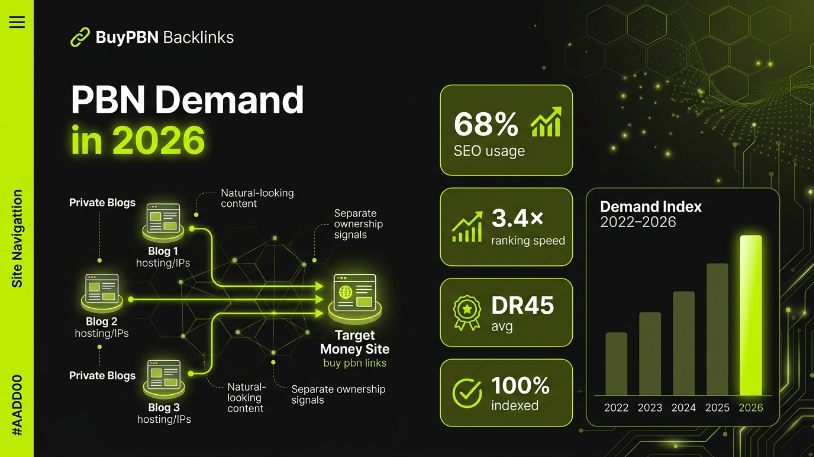
A private blog network is a collection of websites, typically built on expired or aged domains, that are used to pass link equity to a target site. The sites in a PBN were once real, actively indexed websites before they expired. Their backlink history and the authority that came with it was preserved when someone re-registered the domain and rebuilt a site on it.
How PBN Links Pass Authority
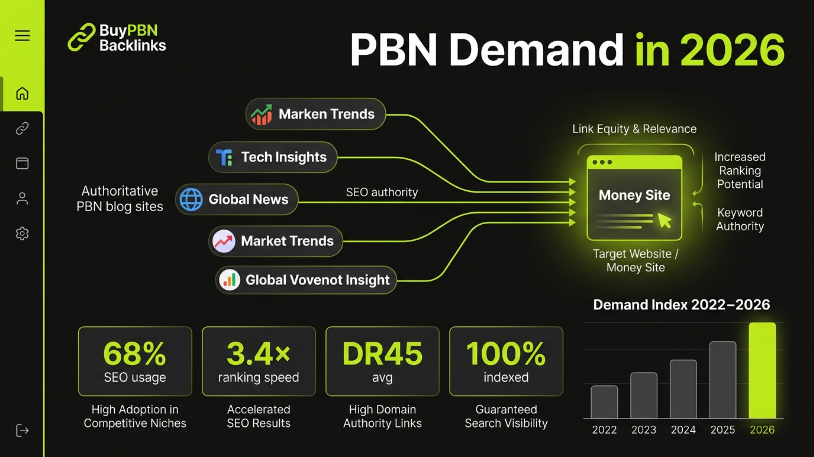
When a PBN site links to your money site, Google’s algorithm counts that link the same way it counts any other contextual backlink — as a vote of confidence. The value of that vote depends on the linking domain’s authority, its topical relevance to your target page, and how naturally the link is embedded in the content. A well-placed PBN link on a domain-relevant, aged site with real history can carry significant weight.
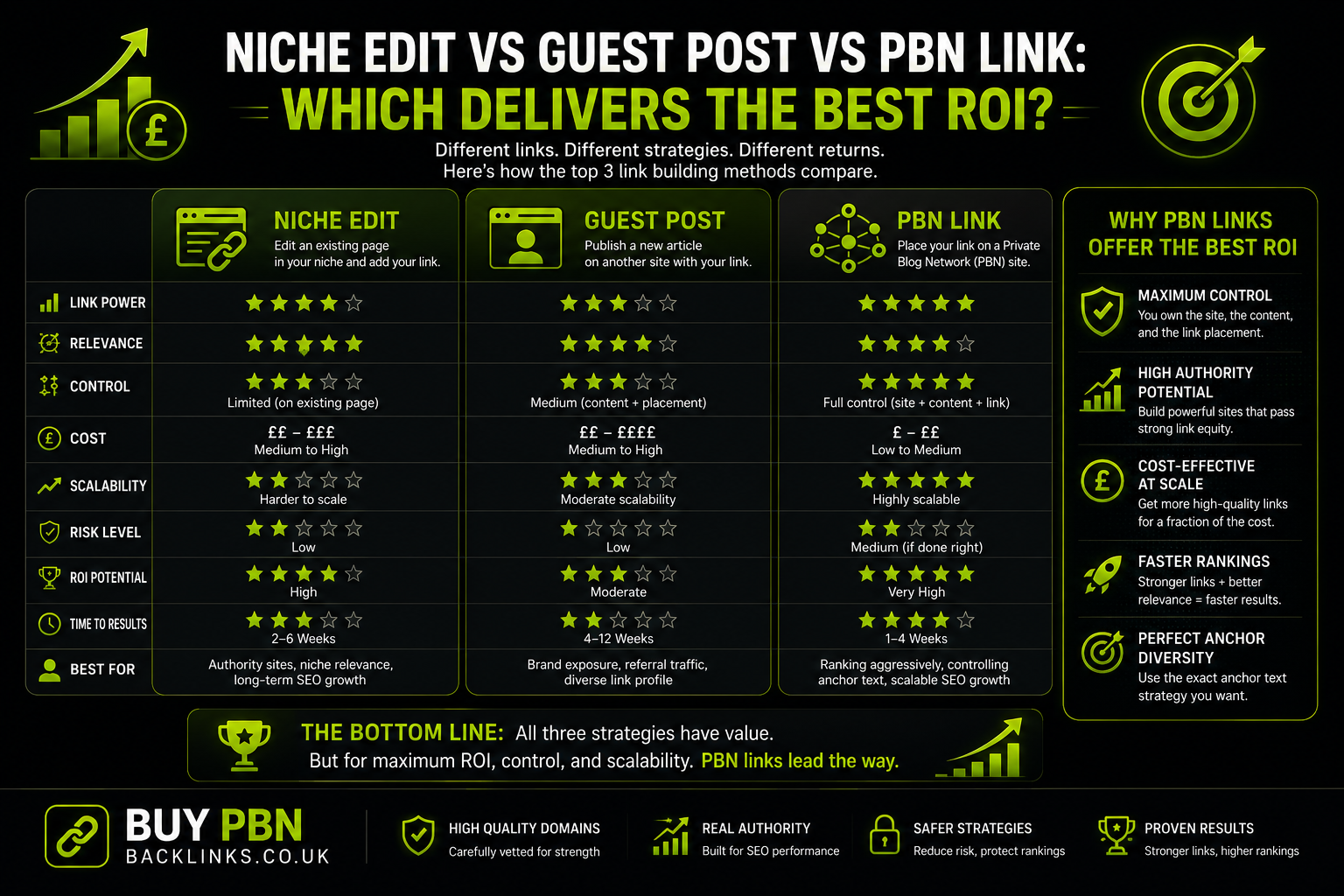
PBN vs Guest Post vs Niche Edit
These terms often get used interchangeably but they are not the same. A PBN link is placed on a site you or a seller controls. A guest post is content published on a third-party site. A niche edit is a link inserted into an existing piece of content on an aged page. When you buy PBN backlinks, you are almost always buying the first category. Understanding the distinction helps you set realistic expectations and ask the right questions before paying. For a detailed breakdown of what sellers actually deliver, see our guide to PBN backlinks for sale.
Why Buyers Are Still Purchasing PBN Links in 2026
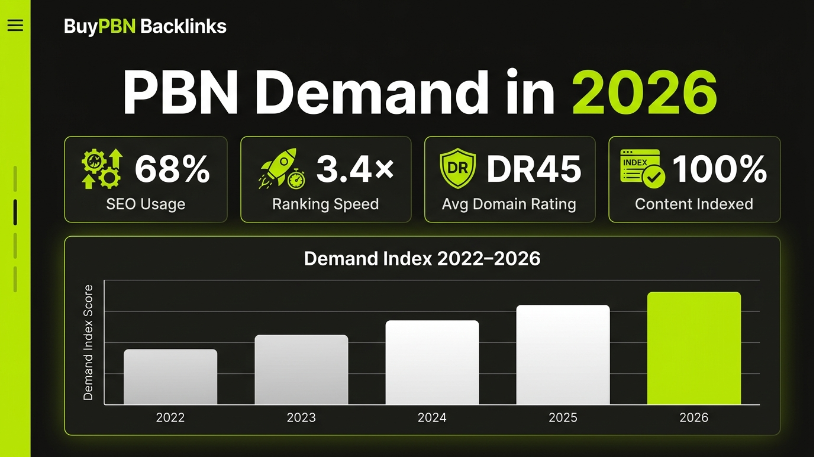
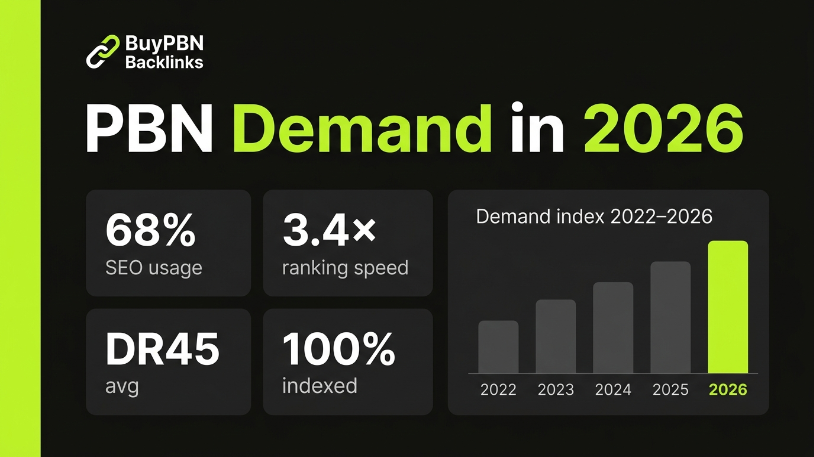
Google’s algorithm has improved dramatically over the past decade. And yet PBN usage has not declined. In competitive niches, organic link acquisition alone is too slow for many business timelines, and PBN links — when bought correctly — still move rankings.
Speed of Impact
Quality editorial links from outreach campaigns can take months to acquire. PBN placements, once indexed, can begin influencing rankings within two to four weeks. For campaigns with deadlines — product launches, seasonal traffic targets, client commitments — that speed matters enormously.
Control Over Anchor Text
One of the rarest things in organic SEO is full control over anchor text. PBN links give you that. Used responsibly, a well-anchored PBN link can close the gap on a specific keyword faster than a cluster of generic editorial mentions.
Cost-Effectiveness for Testing
Before investing in a full content and outreach campaign, many SEOs use a handful of PBN links to test whether a page has the on-page fundamentals to rank. If it moves with links, the campaign is worth scaling. If it does not move at all, the problem is on-page — and you have learned that quickly and cheaply.
How to Evaluate PBN Quality Before You Buy
This is the section that separates buyers who get results from buyers who waste money. Sellers know that most buyers focus on Domain Rating. They inflate it. You need to look deeper.
Domain History: The Most Important Signal
Before anything else, check where the domain has been. Use the Wayback Machine at web.archive.org to verify whether the domain had real content before it expired, whether that content was topically related to your niche, and whether there were real links pointing to pages other than the homepage.
Metrics to Check and What They Actually Mean
| Metric | Minimum Threshold | Why It Matters |
|---|---|---|
| Domain Rating (DR) | 20+ | Proxy for link authority — but easily inflated |
| Referring Domains | 15+ real, non-spam | Quality breadth of the link profile |
| Organic Traffic | Any genuine traffic | Proves Google is indexing and trusting the site |
| Domain Age | 3+ years | Older domains carry more trust signals |
| Topical Relevance | Same or adjacent niche | Context relevance amplifies link value |
Content Quality on the PBN Site
Visit the site itself. Is the content readable and coherent, or clearly AI-spun thin filler? Does the site cover a consistent topic? Are there real contact pages, author bios, and internal links? A link embedded in a well-structured article is a fundamentally different asset from one dropped into a thin AI-generated post.
Hosting and IP Diversity
Ask the seller whether their sites are hosted across different Class-C IP addresses. If twenty of their PBN sites share the same hosting account, the same IP block, or the same nameservers, Google’s algorithm can identify the network as a whole. A quality seller will confirm IP diversity or offer evidence of it. If they cannot or will not answer this question, that tells you everything.
Red Flags That Expose a Low-Quality PBN Seller
Red Flag 1: Inflated Metrics With No Traffic
If a seller’s site shows DR40 but zero organic traffic in Ahrefs or Semrush, the DR has been artificially inflated — usually through link exchanges between sites in the same network. Google does not trust these sites the way the numbers suggest, and your link will not perform.
Red Flag 2: Template Sites With Identical Design
If five sample URLs all use the same WordPress theme, the same sidebar layout, and follow the same content structure, they are almost certainly hosted on the same network with minimal differentiation. This is a classic footprint that Google’s spam systems were built to detect.
Red Flag 3: Refusal to Share Domain-Level Metrics
A legitimate seller will send you the referring domain, DR, organic traffic, and a sample of the content before payment. A seller who says trust me without data is either hiding poor metrics or does not understand their own inventory.
Red Flag 4: Turnaround Times Under 24 Hours
Real PBN placements require writing or placing content on a live site and ensuring it indexes. Sellers who promise 2-hour delivery are either auto-posting or using a network so thin and automated that it provides no real SEO value.
Red Flag 5: Extremely Low Pricing
PBN links from DR20+ sites with real traffic cost money to maintain. Hosting, domain renewals, content creation, and indexing tools all have real costs. If someone is selling placements for £3–£8, they are not maintaining those sites properly.
Red Flag 6: No Indexing Guarantee
Links that are never indexed by Google carry zero weight. Ask the seller explicitly whether they index their placements and how. A good seller will either use indexing services or have a content promotion workflow. If they cannot answer this, assume the link will not be indexed.
PBN Link Pricing: What to Expect in 2026
Entry-Level: £15–£35 per link
DR15–DR25 sites with moderate backlink profiles, basic niche relevance, and 300–500 word placements. Traffic is minimal or unverifiable. Best for Tier 2 linking, testing anchors, and low-competition niches where the bar to rank is low.
Mid-Tier: £35–£80 per link
DR25–DR45 domains with verified organic traffic of 50–500 monthly visits, genuine topical relevance, 500–800 word articles with contextual placement. This is the range where you get real impact without extreme risk if the seller’s standards are solid.
Premium: £80–£200+ per link
DR45+ domains with consistent organic traffic, aged domains with genuine editorial history, 800–1,500 word content, often niche-specific anchor text strategy. Best for competitive niches including finance, legal, SaaS, and health.
How to Place an Order Safely
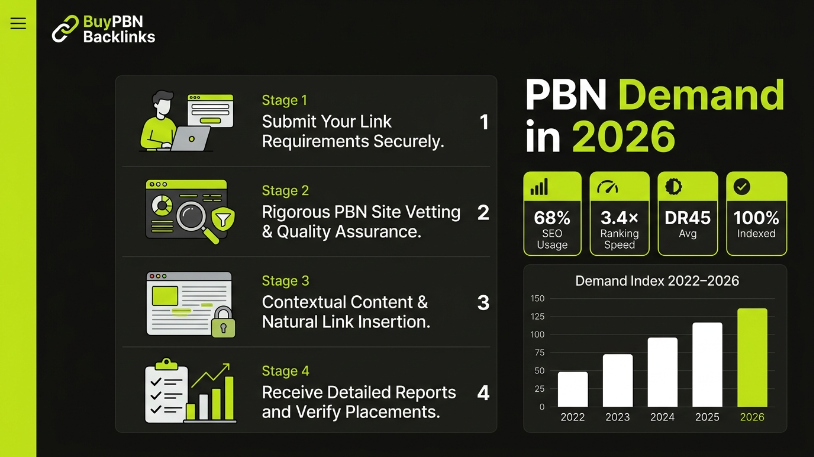
Step 1: Vet the Seller Before Any Payment
Request sample URLs from the network. Run every domain through Ahrefs or Semrush. Check for organic traffic, referring domain quality, and content relevance. Cross-reference the domain history in the Wayback Machine. Do this before you give the seller a brief.
Step 2: Avoid Over-Optimised Anchor Text
Use a mix of branded anchors, partial-match phrases, topical anchors, and naked URLs. Limit exact-match anchors to no more than 10–15% of your total link profile for the target page. A natural anchor profile is your best protection against algorithmic detection.
Step 3: Consider Using a Buffer Site
A buffer site is an intermediate web property that sits between the PBN link and your money site. The PBN links to the buffer. The buffer links to your money site. This adds a layer of separation and can increase the link equity delivered to your target page.
Step 4: Drip the Links Gradually
Do not buy twenty links and have them all go live on the same day. Stagger placements over two to four weeks. Natural link acquisition is uneven and organic — a sudden spike of new links from PBN sites is an unnecessary footprint signal.
Step 5: Monitor and Verify Indexation
After your placements are live, use Google Search Console URL Inspection tool to verify each page is indexed. You can also search site:domain.com/page-url in Google to confirm. Unindexed links provide zero ranking value.
Step 6: Keep a Spreadsheet of Every Placement
Track the domain, DR, organic traffic at time of purchase, anchor text used, target page, date live, and date indexed. This log protects you if a seller disappears, helps you spot if a link is dropped, and gives you data to make smarter buying decisions over time.
How to Track Results After Buying PBN Links
Baseline Rankings Before You Build
Before placing any links, record your current ranking position for your target keyword and two to three closely related terms. Use a rank tracker like Ahrefs, Semrush, or Google Search Console performance report.
What to Expect and When
Weeks 1 to 2: link goes live and likely indexes with no visible ranking movement yet. Weeks 3 to 4: Google recrawls the linking page and begins processing the signal. You may see early movement. Weeks 5 to 8: most quality PBN links show measurable impact within this window if the on-page foundation is solid. Week 8 onwards: if there is no movement, investigate whether the link is indexed, whether the page is competitive enough, and whether the target page is well optimised for the keyword.
FAQ
Is it safe to buy PBN links in 2026?
PBN links carry inherent risk because they violate Google Webmaster Guidelines. However, the risk level is heavily influenced by quality. Links from well-maintained, IP-diversified, content-rich PBN sites on topically relevant domains carry significantly lower detection risk than bulk links from obvious networks. If you buy from a careful seller and use natural anchor text, the practical risk for most campaigns is manageable but never zero.
How many PBN links do I need to rank?
There is no universal answer. A low-competition local keyword may respond to two or three quality links. A national keyword in a competitive category may require ten to twenty links alongside a strong content strategy. Use your competitors backlink profiles as a baseline — analyse the top three ranking pages and assess how many referring domains they have.
What is the difference between a PBN link and a regular backlink?
A regular backlink is earned through editorial processes — another website chooses to link to you because of the value of your content. A PBN link is placed deliberately on a site you or a seller controls, bypassing the editorial process. Both pass authority; only one is within Google guidelines.
Can I use PBN links for a client website?
Yes, but with caution and clear communication. Some agencies build PBN campaigns on buffer sites before pointing equity toward client properties. Clients should understand the risk profile. If a client site cannot withstand the risk of a manual review, organic link building through content and outreach is a safer route.
How do I know if a PBN seller is legitimate?
Ask for sample URLs before payment. Run them through Ahrefs and Semrush. Check for real organic traffic, look at the Wayback Machine history of each domain, and visit the site itself. A legitimate seller will answer questions about their hosting setup, IP diversity, and indexing process. A seller who deflects these questions is not worth trusting.
What anchor text should I use when buying PBN links?
Use a varied anchor text strategy. Branded anchors, naked URLs, and partial-match phrases are safest. Limit exact-match anchors to no more than 10 to 15 percent of your total link profile for that target page. Over-optimised anchors are one of the clearest algorithmic signals of unnatural link building.
What happens if a PBN link gets deindexed?
If a PBN site loses Google trust and is deindexed, any links from it stop passing value. A good seller will replace deindexed placements or offer credit. Always ask about their replacement policy before purchasing, and make a note of live URLs so you can monitor them.
Conclusion
Buying PBN links in 2026 is neither as dangerous as the SEO establishment makes it sound nor as safe as sellers sometimes imply. Quality matters enormously, and the margin between a link that moves rankings and a link that creates risk is often the difference between a seller who understands what they are selling and one who is simply monetising a pile of expired domains. To compare PBN links against other off-page tactics, read our buy niche edits vs PBN links comparison guide.
Always vet the domain before paying — traffic and history matter more than DR. Use a natural anchor text strategy. Track your placements and results systematically. If you are ready to start building, take a look at the buy PBN backlinks options available, built on quality domains with real organic footprint and full metrics transparency.
About the Author
Louis Dobbler is a PBN link building strategist and off-page SEO specialist with deep expertise in private blog network construction, domain acquisition, and authority link campaigns. At BuyPBNBacklinks, Louis oversees network quality, domain vetting, and campaign strategy — ensuring every PBN backlink placed meets the highest standards for authority, footprint safety, and long-term SEO performance.

Louis Dobbler is a PBN link building strategist and off page SEO specialist with deep expertise in private blog network construction, domain acquisition, and authority link campaigns. With years of experience working across competitive verticals including iGaming, crypto, finance, and CBD, Louis has helped hundreds of SEO agencies and affiliate marketers engineer rankings that hold through every Google core update.
At BuyPBNBacklinks, Louis oversees network quality, domain vetting, and campaign strategy ensuring every PBN backlink placed meets the highest standards for authority, footprint safety, and long term SEO performance.